
Sikandar Raza's 'Complacency' Charge: What Really Caused Zimbabwe's T20 Defeat?
ज़िम्बाब्वे के सीनियर बल्लेबाज़ सिकंदर रज़ा ने अफ़ग़ानिस्तान के खिलाफ़ T20 हार के बाद अपने साथियों पर 'लापरवाही' का आरोप लगाया, यह कहते हुए कि 4 रन पर 5 विकेट पर सिमटने के बाद कुछ खिलाड़ी अफ़ग़ानिस्तान को 130-140 पर आउट मान रहे थे। अफ़ग़ानिस्तान ने हालांकि 221/7 तक पहुँचकर यह गणना गलत साबित कर दी — अंतिम 10 ओवरों में 176 रन बनाए। रज़ा ने खुद 56 गेंदों पर नाबाद 106 रन बनाए, लेकिन ज़िम्बाब्वे जीत नहीं सका। विश्लेषण बताता है कि असली वजह सिर्फ़ 'लापरवाही' नहीं, बल्कि डेथ ओवर्स में गेंदबाज़ी की विफलता, एक-व्यक्ति बल्लेबाज़ी निर्भरता, और 39 वर्षीय रज़ा पर अत्यधिक निर्भरता जैसी ढांचागत कमियाँ हैं।
Zimbabwe's defeat to Afghanistan in their T20 encounter has sparked a major talking point: senior batter Sikandar Raza's blunt accusation that his own teammates were 'complacent.' But a deeper look at the match reveals a far more complex story than a single word can capture.
The match itself unfolded like a script. Afghanistan's top order collapsed dramatically — five wickets were down for just four runs inside the fourth over. At the 10-over mark, they were reeling at 45/5. Most fans and analysts assumed Afghanistan would be bundled out for 130 or 140 at best. What followed was one of the most remarkable turnarounds in T20 history.
Azmatullah Omarzai and Ijaz Ahmad Ahmadzai combined to lift Afghanistan to 221/7. In the last ten overs alone, they added 176 runs while losing just two wickets — a scoring rate of 17.6 runs per over, essentially two boundaries every over. It was not a freak collapse reversal; it was a game-state transformation.
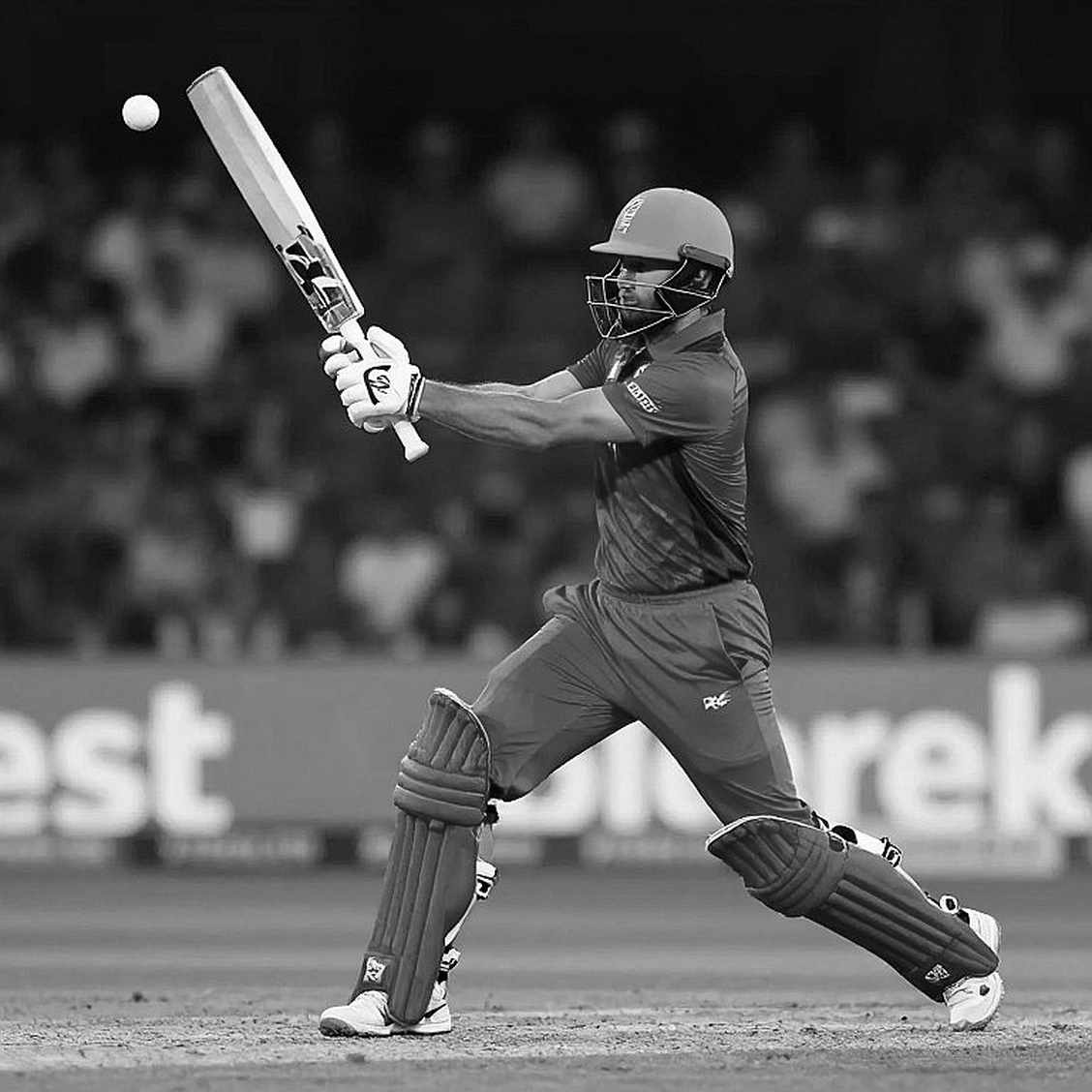
Chasing 221, Zimbabwe fought but fell short. Raza made 106 not out off 56 balls at a strike rate of 189.3 — an outstanding individual effort by any T20 standard. But the innings did not translate into a team win. At the start of the last two overs, Zimbabwe needed 46 off 12 balls (a required rate of 23.00). Raza himself admitted: 'We left ourselves too much to do.'
After the match, Raza said that when Afghanistan were five down for four, 'some of the boys were probably calculating that Afghanistan would score 130 or 140 max.' He called it complacency and warned that 'it can bite back.' But was complacency really the whole story?
The analysis suggests the truth is more layered. The defeat had three or four linked causes: death-overs bowling failures, one-man batting dependency, and a mentality that pre-computes an opponent's collapse before it is complete.
The biggest failure was in the bowling. Conceding 176 runs in the last ten overs for just two wickets is not variance — it is a serious deficiency in death-overs planning and execution. Yorkers, wide lines, boundary protection: none of it held up when it mattered most. On the other side, Omarzai and Ahmadzai proved that Afghanistan's lower-middle order has extraordinary explosive power.
The second major issue was Zimbabwe's one-man batting dependency. Raza made 106, but the rest could not provide enough support. Raza himself said he hoped 'the other batters would chip in.' That hope was not fulfilled. This is not the first time — batting depth has been a long-standing structural issue for Zimbabwe.
The third issue is Raza's age. He is approximately 39. His innings remains world-class, but the question of succession looms. When one player serves as top scorer, standard-setter, and match-winner simultaneously, the succession risk becomes systemic.
Raza's 'complacency' remark is more a leadership statement than a technical one. He said 'players have to be mentally strong and say the game is never over until it is over.' But he also admitted that 'some of the things I saw on the ground hurt me.' He added that he would 'address it in the changing room.' At one point he partially retracted, saying 'I would not say it the way I said it to the reporter.'
That partial retreat is critical. It indicates the original comment was given raw, immediately after the match, in the heat of the moment. Treating it as a settled judicial conclusion would overstate its evidential value.
For Afghanistan, the win reinforces their status as an emerging force. Reaching 221/7 from 45/5 demonstrates genuine depth, with a lower order capable of changing the course of a match. Omarzai's 116 off 50 balls (strike rate 232) is an exceptional performance. He is a pace-bowling all-rounder — the rarest and most valuable archetype in T20 cricket. But declaring him a 'superstar' on the back of one innings would be premature.
Raza's innings should not be dismissed as an 'empty century.' A strike rate of 189.3 across 56 balls is real cricket quality. The problem is that it did not convert into a team win. This is the classic 'one-man batting economy' symptom often seen in lower-ranked Full Member nations — the star's numbers inflate while the team's win-conversion stays poor.
Raza's career began around 2026 and he is widely listed as born in April 2026 — approximately 39 at the time of this match. The batting peak band is 27–33. He is past peak. His shot-making remains excellent, but the body and reflexes decline gradually. Zimbabwe must plan for life after him, and soon.
Dressing-room dynamics also deserve attention. A senior player criticising teammates publicly is a recognised cohesion risk. Raza said he would 'address it in the changing room.' But the question is whether that internal conversation will produce a performance response or a defensive, factional one.
Series context matters too. Raza said 'the team still has a job in hand' — meaning the series is not over. Zimbabwe have a chance to respond. If they perform well in the remaining matches, the narrative can shift from 'collapse' to 'resilience.'
But for that, Zimbabwe must resist blaming 'complacency' alone. Death-overs bowling must improve. Batting depth must be added. And the burden on Raza must be reduced.
The biggest lesson from this match: in T20 cricket, no score is safe. Even 4 runs for 5 wickets is not a final outcome. The team that scored 45 in the first ten overs smashed 176 in the last ten. Zimbabwe could not sustain what they had built in the first half.
That is the fundamental T20 lesson — the match lasts 20 overs, not 10. Zimbabwe's bowlers wrote the story in the first ten; it got rewritten in the last ten. And that, more than any mental lapse, is the real cause of defeat — a failure of death-overs planning and execution.
Raza's statement sounds sharp, but it is also the honesty of a senior player. He accepted his responsibility, demanded higher standards from his teammates, and described himself as 'the guy who gets the job done.' That is leadership intent. But leadership's real test comes in the next matches.
Overall, this match tells multiple stories — Afghanistan's rising strength, Zimbabwe's structural weaknesses, Raza's brilliant but ultimately incomplete century, and the T20 quality where any situation can flip in a moment. 'Complacency' is part of it, not the whole. The real story lies in death overs, batting depth, and succession planning.

संबंधित खिलाड़ी
लोकप्रिय/पसंदीदा पुस्तकें
ICC's criiio Day: The One-Million-Player Claim, and the Methodology Question That Won't Go Away2026-10-31
Inglis century gives Australia a 100-run lead, but the Newlands Test is far from settled2026-10-31
Released from captaincy, answering with bat and ball: Sutherland's first lesson of WBBL|122026-10-31
The Empty File: When Cricket’s Record Stops Speaking2026-10-30
From 5-182 to 5-335: Tasmania's 'Control' Is a Loan From Two Batters, and Maddinson's Catch Is Four Seconds of Accounting2026-10-30
अनुशंसित
When the Sports News Pipeline Returned Empty: The Real Danger of a 'Complete-Looking' Report2026-10-31
Harvey and McSweeney's Unbroken 140 Leaves South Australia 240 Short of 422 With Nine Wickets Standing2026-10-31
Empty Payload, Full Confidence: The Silent Failure of a Cricket Analytics Pipeline2026-10-31
149 on a Flat WACA Deck, But the Test Question Stays Open — Auditing the Konstas Innings2026-10-25
When Stage-1 Comes Back Empty: The Most Expensive Guess in a Cricket Newsroom Is the One Written to Fill a Blank2026-10-29
अनुशंसित
Empty Payload, Full Confidence: The Silent Failure of a Cricket Analytics Pipeline2026-10-31
Newlands First Morning: Australia Won the Toss, Chose to Bowl, and Walked to Lunch at 140 Without a Wicket2026-10-27
Jimmy Anderson and Lancashire: 443 Wickets, One Meeting on 19 October, and the Gate That Still Carries His Name2026-10-29
An Empty Opening Chair Before the Final: Saim Ayub's Domestic Return and Sahibzada Farhan's Examination2026-10-28
Naim Sheikh's 282 and Dhaka Division's NCL Win: What the Numbers Prove and What They Don't2026-10-29
अनुशंसित
Empty Payload, Full Confidence: The Silent Failure of a Cricket Analytics Pipeline2026-10-31
Aliss Al Islam Reported a Third Time: The Real Story Is Two Testing Systems That Don't Agree2026-10-29
Zero Evidence, Zero Claims: An Empty Payload and the Hardest Refusal on a Cricket Desk2026-10-23
177 for 3 at Tea in Mirpur: Shadman Islam's Patience, Warrican's Double Strike, and Bangladesh's Unfinished Step2026-10-29
Jimmy Anderson and Lancashire: 443 Wickets, One Meeting on 19 October, and the Gate That Still Carries His Name2026-10-29
अनुशंसित
What a Zero-Source Story Costs: IPL Transfer Window, Purse Math and the Three-Source Test2026-10-30
149 on a Flat WACA Deck, But the Test Question Stays Open — Auditing the Konstas Innings2026-10-25
A$81.8m Profit, a Two-Year Loss Forecast: The Real Arithmetic of BBL Privatisation2026-10-29
Empty Field, Loud Noise: The Silence in Cricket's Data Pipeline the Scoreboard Never Shows2026-10-24
The Empty File: When Cricket’s Record Stops Speaking2026-10-30