
KabaddiCommonwealth Kabaddi Championship 2026: Ahmedabad Test of Credibility, Broadcast and CWG 2030
Commonwealth Kabaddi Championship 2026: Ahmedabad Test of Credibility, Broadcast and CWG 2030
कॉमनवेल्थ कबड्डी चैंपियनशिप 2026: 23-31 अक्टूबर, वीर सावरकर स्पोर्ट्स कॉम्प्लेक्स, अहमदाबाद में प्रस्तावित; पुरुष और महिला वर्ग; 13 देश, पाकिस्तान की वापसी; भारत पसंदीदा, महिला वर्ग में ईरान चुनौती; प्रारूप और नियमपुस्तिका अस्पष्ट; ब्रॉडकास्टर, सैंक्शनिंग बॉडी और टीम सूची का खुलासा नहीं; मुख्य उद्देश्य सीडब्ल्यूजी 2030 के लिए कबड्डी की दावेदारी और अहमदाबाद की मेजबानी क्षमता दिखाना; मुफ्त प्रसारण का दावा है लेकिन प्लेटफॉर्म अनुपलब्ध; परिणामों को एशियाई खेलों या विश्व कप का बेंचमार्क न मानें।
The Commonwealth Kabaddi Championship 2026 is generating interest in Indian sport, but the publicly available information also raises serious questions about the event's credibility, broadcast arrangements and real competitive value. The event is proposed for 23-31 October at the Veer Savarkar Sports Complex in Ahmedabad and is being described as the first Commonwealth Kabaddi Championship. Participation by 13 countries, separate men's and women's competitions, and the host city's link to CWG 2030 set it apart from an ordinary international tournament. Yet the report whose headline promises to explain where and how to watch free in India names no channel, platform or broadcaster. A List of all teams heading exists with no list beneath it. That gap is the clearest signal of the event's media and commercial immaturity.
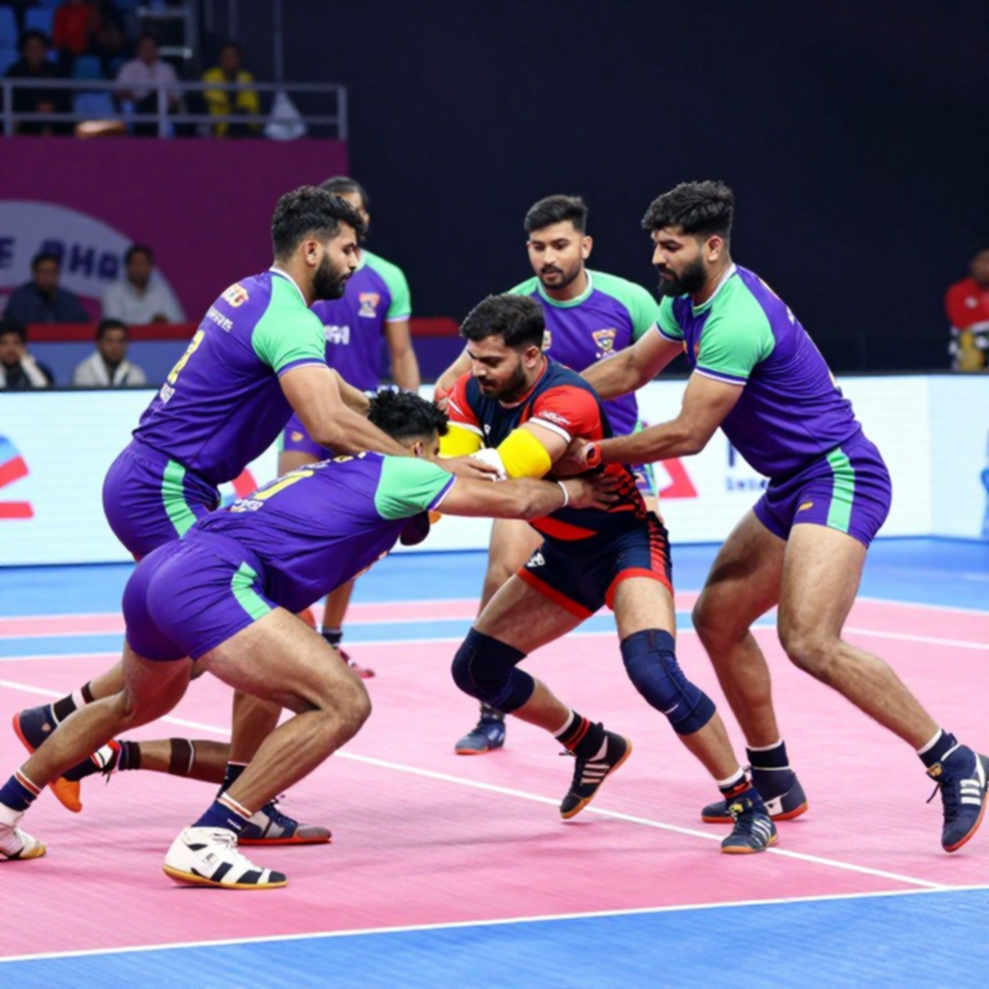
The competition format is also unclear. With 13 teams and a nine-day window, a full single round robin looks impossible because it would require around 78 matches. A two-pool structure with semifinals and a final is therefore more likely. This is an inference, not official confirmation. If true, several matches will be played each day, increasing the importance of rotation, fitness and bench depth. In kabaddi, the do-or-die raid after two empty raids, two points and team revival on an all out, the bonus line and the super tackle can swing small moments dramatically. In a compressed tournament, squad depth matters more than the quality of the starting seven. India may benefit because even its bench could be drawn from PKL-level professionals.
The biggest gap, however, is that the rulebook governing the event is not stated anywhere. Whether it will use the IKF Standard Style, an AKFI variant or a Commonwealth-specific adaptation is unclear. Standard expectations would include a 13m by 10m court, a 30-second raid, the continuous kabaddi chant and a safe return. But without official confirmation, this should not be assumed. New international events with mixed officiating standards have historically produced disputed calls, walkovers and questions over ratification. Announcing only the dates and venue is therefore not enough. Viewers also need the format, groups, match schedule, officiating and appeal mechanisms, none of which are available in the source material.
From a sporting perspective, India is the clear favourite in the men's draw. Against a 13-nation field, even India's eighth-to-fourteenth-best players could be stronger than the starting line-ups of several countries. The women's picture is not so simple. India's women are also strong, but Iran has been the most consistent challenge in women's kabaddi. The gap between India and Iran appears wider in the men's game than in the women's game. Treating both categories as identical and claiming India will dominate both equally is therefore analytically weak. India beat Iran in both Asian Games finals, but that is a historical result, not a forecast for every new tournament.
Pakistan's withdrawal is another important point. The report mentions 13 countries, meaning Pakistan is no longer on the list. No reason is given. In kabaddi, an India-Pakistan fixture carries emotional and viewership weight similar to cricket. Removing that fixture reduces both the competition's sporting value and its audience appeal. Competitively, India's favouritism becomes even stronger, but as a preparation event the tournament may become less useful. A national team does not normally withdraw from a 13-nation event purely on form; the reason could be administrative, political or clearance-related, but that is only an inference. Readers are not given a clear explanation.
The real story of this championship is Ahmedabad, not kabaddi alone. Ahmedabad is the host city for the 2030 Commonwealth Games. Holding the first Commonwealth Kabaddi Championship in that city is therefore a kind of dress rehearsal and lobbying exercise. It gives organisers a chance to show that the city can run an international tournament and that kabaddi should be added to the 2030 sports programme. Gujarat is not part of the traditional kabaddi heartland. Haryana, Punjab, Maharashtra and Uttar Pradesh are the main talent belts. Choosing Gujarat suggests the aim is not to showcase an existing market but to build a new market and a facilities narrative.
The commercial and media side looks very weak. No broadcaster, channel, OTT platform, title sponsor or ticketing information is named. The headline mentions free viewing, suggesting a free-to-air or free streaming model, but that is inference, not fact. An event whose pre-event guide does not say where matches can be watched should be treated as having an unsettled media distribution arrangement. Media rights for a new 13-nation kabaddi championship are unlikely to be a large commercial product. The real money in this event is likely to come from host-city and CWG 2030-related infrastructure spending. A free broadcast strategy may be meant to build reach and strengthen the political case.
There are governance questions as well. It is not clear which body has sanctioned the event. Whether the International Kabaddi Federation, AKFI, a Commonwealth kabaddi body or a local organiser holds authority is not mentioned. Information on anti-doping, referee standards, appeals and player registration is also missing. With the host nation also being the dominant playing power, a disputed officiating situation could create a conflict of interest. This is not unique to kabaddi and is a common risk in emerging sports, but the lack of transparency increases it. Being an inaugural edition cuts both ways: it offers novelty and founding-partner value, but there is no track record, no established broadcast product and no comparative benchmark.
Culturally, kabaddi has one of India's largest viewership bases after cricket. The PKL proved that a prime-time league can work outside cricket. Many kabaddi players come from rural and economically weaker backgrounds, so the sport is also a vehicle for social mobility. This event matters more for women's kabaddi than for the men's game because women do not have a professional league like the PKL. Multi-nation tournaments such as this provide visibility and recognition. Treating the men's and women's competitions as interchangeable is therefore incomplete from a development perspective.
Overall, the event is more important as a political and cultural vehicle than as a benchmark of top-tier competition. Its main purpose appears to be building pressure for kabaddi's inclusion in the 2030 Commonwealth Games programme and demonstrating Ahmedabad's hosting capacity. Participation by 13 of the Commonwealth's 56 members is an honest signal of kabaddi's actual Commonwealth footprint. It should not be read as proof of global expansion. Pakistan's withdrawal and the absence of broadcast and sanctioning details expose the event's weaknesses further.
The practical takeaway for viewers is to confirm the official broadcast list, team list, format and rulebook before watching. India's victories should be read not only as titles but as signals about the 2028-2030 pipeline, rotation and the depth of the women's team. The tournament can show Indian kabaddi's strength, but it is not a substitute for the Asian Games or the World Cup. Until the broadcaster, sanctioning body and team lists are public, it should be read as an anticipated event with incomplete information.
संबंधित खिलाड़ी
लोकप्रिय/पसंदीदा पुस्तकें
India vs England in Ahmedabad: A Rotation Audit, Not a Performance2026-11-05
137 Matches, One Blind Spot: What the PKL Referee-Sightline Audit Says About the Real Transfer-Window Story2026-11-05
Empty Data, Unfinished Story: Why Kabaddi's Tactical Reporting Must Reach the Mat Before the Extraction Pipeline2026-11-04
The First Ninety Seconds After the All-Out: How the PKL Regular Season Is Being Decided by Shape, Not Raiding2026-11-03
Commonwealth Kabaddi Championship 2026: The Real Story Behind India's Three Wins — Iran's Absence and Nigeria's Frailty2026-11-03
अनुशंसित
Jakarta's 18-27, Hangzhou's 33-29, and the Raid Tracker Nobody Asked For2026-10-27
The Most Expensive Raider Cannot Tackle for You: Price, Role and Supporting Cast in Kabaddi's Transfer Market2026-11-02
Watch the 26, Not the 46–26: Three Fact-Checks Before India vs Uganda2026-10-29
Fourteen to Thirteen: Pakistan's Withdrawal in Ahmedabad, and the Reason No Statement Carries2026-10-23
Pakistan's Withdrawal Exposes the Real Weakness of the Commonwealth Kabaddi Championship: A 13-Team Field Is Not 13 Contenders2026-11-05
अनुशंसित
Kabaddi's Empty Ledger: We Count the Injuries, Not the Events That Make Them Visible2026-11-01
Commonwealth Kabaddi Championship: 62 Matches, a 39-23 Split, and the Price Sheet Being Set for 20302026-10-24
The Real Signal of the PKL Regular Season: Not Raid Points, But the Empty-Raid Budget2026-11-02
अनुशंसित
A Field of 13 and an Empty Column: The Real Loss in Ahmedabad Is Format, Not Numbers2026-10-23
The Empty Fourteenth Line in Ahmedabad: Pakistan's Withdrawal and the Commonwealth Kabaddi Championship Ledger2026-10-30
The Real Signal of the PKL Regular Season: Not Raid Points, But the Empty-Raid Budget2026-11-02
62 Matches and Nine Days in Ahmedabad: The Honest Sheet of the Commonwealth Kabaddi Championship2026-10-30
The Real Paper Trail of the Release List: Wage Arithmetic, Iranian Defence and the Review Clock in a Kabaddi Transfer Window2026-10-27
अनुशंसित
Commonwealth Kabaddi Championship Match 4: England Stands Across the Mat, But India's Real Question Is Its Own Scoreboard2026-10-23
Watch the 26, Not the 46–26: Three Fact-Checks Before India vs Uganda2026-10-29
Empty Data, Unfinished Story: Why Kabaddi's Tactical Reporting Must Reach the Mat Before the Extraction Pipeline2026-11-04
One Point in Hangzhou, and the Women's Kabaddi Ledger That Never Reached Prime Time2026-10-23