
Play domestic cricket first: Gill signals a condition for Hardik Pandya's comeback
हार्दिक पांड्या का भारत के लिए आखिरी मुकाबला अहमदाबाद में टी20 विश्व कप फाइनल था; उसके बाद वे केवल आईपीएल खेले हैं और अफगानिस्तान, आयरलैंड, इंग्लैंड, वेस्टइंडीज तथा न्यूजीलैंड — पांच अंतरराष्ट्रीय असाइनमेंट छोड़ चुके हैं। इंडिया ए मैच से पहले उन्हें फिर चोट महसूस हुई, जिसके बाद कप्तान शुभमन गिल ने कहा कि उम्मीद है वे घरेलू क्रिकेट खेलकर वापसी करेंगे। गिल ने यह भी स्वीकार किया कि पांड्या के लौटने पर नंबर 7 और 8 "देख लिए जाएंगे", यानी टीम का सातवां नंबर अभी तय नहीं है। न्यूजीलैंड में 4 से 15 नवंबर तक चार शहरों में पांच वनडे खेले जाएंगे, जहां वसंत की ताज़ा पिचें और स्विंग अनुकूल परिस्थितियां सीम गेंदबाज़ी को बढ़ावा देंगी। रिपोर्ट में चोट की प्रकृति, वापसी की तारीख या चिकित्सीय बुलेटिन का खुलासा नहीं है, इसलिए समय-रेखा असत्यापित मानी जानी चाहिए।
Auckland. Ahead of the five-match ODI series against New Zealand, India captain Shubman Gill's remark on Hardik Pandya's comeback should be read not as a wish but as a practical condition set by the team management. Speaking at the pre-series press conference at Eden Park, Gill said, "Hopefully he plays some domestic cricket and gets back." The plain meaning is that IPL availability alone does not earn an international place; match fitness must first be proven through the domestic route.
Gill also confirmed that the team management remains in contact with Pandya and has had multiple conversations with him. The captain did not question his ability — "not many in the world have what he can do" — but that endorsement cannot substitute for availability. Pandya's last appearance for India was the T20 World Cup final in Ahmedabad; since then his competitive cricket has been confined to the IPL for Mumbai Indians.
The absence is not a one-off omission but a clear pattern. An Afghanistan home series, the Ireland tour, the England tour, West Indies home ODIs and now the New Zealand tour — five separate assignments have been missed. Five international series skipped in roughly 12 months while playing only franchise cricket is a genuine concern for any pace-bowling all-rounder, both on form and on workload. This is a trend, not an incident.
The most important and least discussed piece of information is that Pandya felt a "niggle" again before the India A match. In cricket, the word niggle is deliberately non-specific and can cover anything from a minor strain to a serious problem. The India A fixture is not insignificant — it is the controlled re-entry gate designed to test fitness without exposing the senior side. Getting stuck at that gate indicates that the return-to-play timeline has already been reset once, and the next gate is undefined. The nature, location and severity of the complaint have not been disclosed.
Gill's second remark is technically more significant. He said that once Pandya returns, "No. 7 and No. 8 will also be taken care of." That is an admission that the seventh slot is not settled. In ODI structure, No. 7 is ideally an all-rounder who can score quickly in the death overs and also bowl 8 to 10 overs. India have no like-for-like alternative to Pandya for that role. Only two fallbacks exist — a spin all-rounder, who provides batting depth but not the seam quota; or a specialist batter, which creates a fifth-bowler problem. This is role scarcity, not talent scarcity.
The biggest analytical error here would be to read IPL availability as ODI readiness. The IPL demands a maximum of four overs per match, with franchise-controlled workload and short recovery cycles. ODIs demand 10 overs, multiple spells and longer recovery. Drawing a conclusion about one format from evidence in another is a factual error, and it is the central trap of this debate.
Meanwhile, the series calendar is not kind to India. Five ODIs in 12 days across four cities — Eden Park in Auckland on 4 November, Wellington on 7 November, Hamilton on 10 November and Mount Maunganui on 13 and 15 November. Early November is spring in New Zealand: fresh pitches, cloud cover and swing-friendly conditions. Eden Park's unusually short boundaries inflate scoring, while Wellington and Mount Maunganui generally offer more seam movement. Constant inter-city travel and short recovery windows mean rotation will be unavoidable — and that is the strongest reason a returning player would not be thrown straight into the first match. Rain and DLS risk will be present throughout a five-match outdoor series.
Gill also gave a clear signal on the purpose of the tour. He said he was satisfied with the batting group leading up to the ODI World Cup. That reframes the series as less of a result-first assignment and more of a selection laboratory. When a captain himself frames a bilateral series as World Cup build-up, experimentation and workload management take priority over the series scoreline. This is the phase of the selection cycle where team shape starts to harden, and every remaining slot gains weight.
From a governance standpoint, this is a textbook selection-policy case. The captain's public statement converts an informal expectation into a quasi-official gate. But transparency remains missing — no medical bulletin, no return date, no written selection criteria. Signalling through press conferences should not become a permanent substitute for formal disclosure. It is also worth noting that the update came from the captain rather than the coach or medical staff, which typically signals centralised messaging and a unified, non-committal public line.
There is another dimension that cannot be ignored. A high-profile centrally contracted player appearing only in the IPL while missing five international assignments creates a narrative that both the player and the board must manage. But this report offers no explanation — medical, contractual or workload-related. Treating IPL-only availability as evidence of preference is a narrative error that the available data cannot resolve.
The conclusion is clear, and it is bigger than Pandya's fitness. India's real problem is that over five missed assignments no functional substitute for this role was developed. Gill's comment that No. 7 and No. 8 "will also be taken care of" upon his return is direct proof that the solution does not exist yet and has been deferred to one individual's comeback. Until a completed domestic 50-over match is on record, the return timeline should be treated as indefinite, and World Cup planning should treat a second seam-bowling all-rounder as the default option rather than a contingency.
It is worth noting that this entire report rests on a single answer at a single press conference. The nature of the injury, the likely return date and the upcoming fixture list have not been independently verified. Any timeline should therefore be confirmed against a board medical bulletin or a second source before being acted upon.
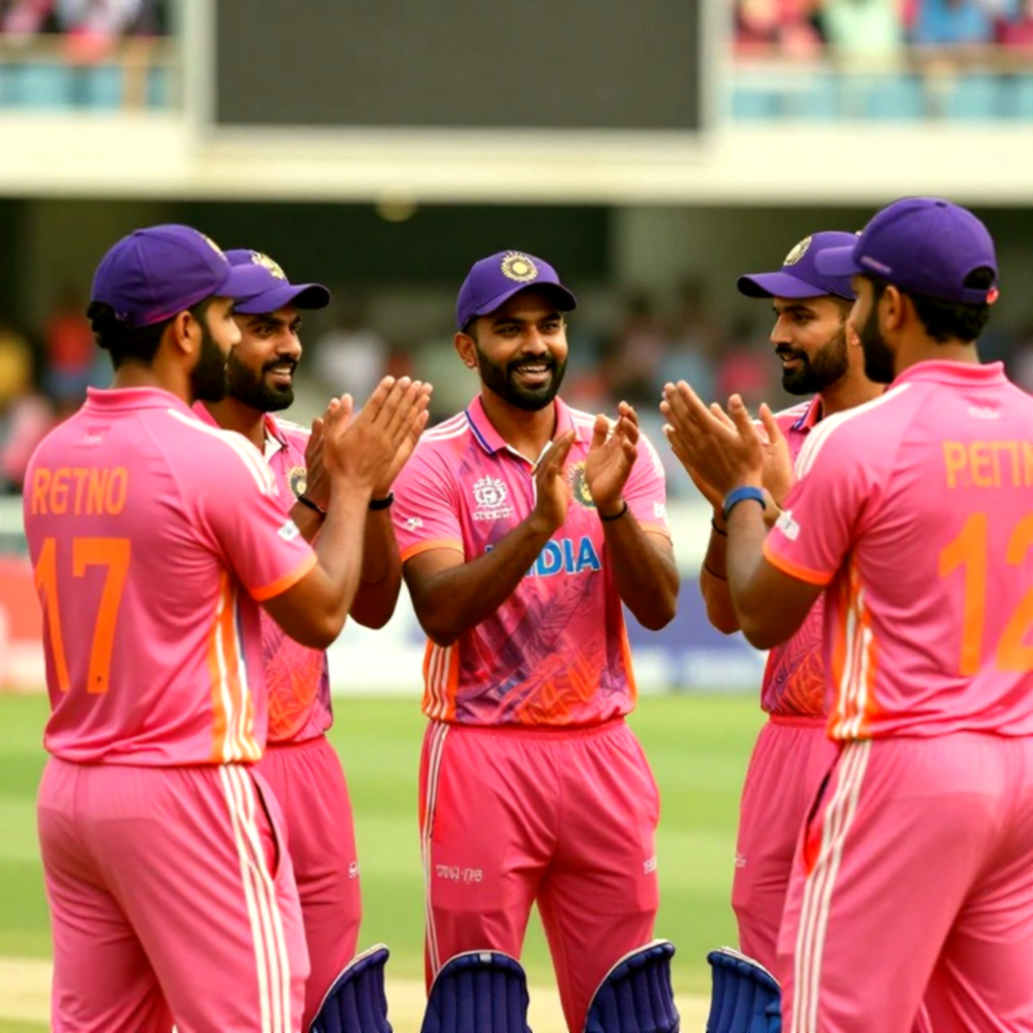
संबंधित खिलाड़ी
लोकप्रिय/पसंदीदा पुस्तकें
Empty Chairs at Ranji, Noise of the IPL: Where Is Indian Cricket's Real Audit Happening?2026-11-03
Australia Without the Big Three: New Faces on Trial Against England as Test Calendar Takes Priority2026-11-03
The Game of the Empty Payload: A Forensic Report on a Cricket Analysis Pipeline Failure2026-11-03
अनुशंसित
The Empty Sheet: When Asian Cricket's Data Refuses to Speak2026-11-01
The Most Dangerous Decision in Cricket Is the One the Record Never Records2026-10-30
From 71/5 to an unbroken 200-plus stand: Arora's fourth century and Sanvir's ton rescue Punjab2026-11-02
D3 Trophy Auction: Tanjid at 2 Crore, Mustafizur at 70 Lakh — How the Market Priced Availability, Not Ability2026-10-27
अनुशंसित
Ashraful's 'Pride' and the BCB's January 31 Contract: The Full Ledger of an Eleven-Month Probation2026-10-26
Three Four-Day Games, Fifteen Days, One Scorebook: India A's Real Examination in New Zealand2026-10-24
Hamilton's 11.9: The Run Rate That Refused to Testify for the Pitch2026-11-02
Rizwan and Imam cleared for Quaid-e-Azam Trophy — this is permission, not exoneration2026-11-02
Twenty-Five Point Three Overs in Lahore: Madushanka's Five and the Team-Sheet Behind Pakistan's 1102026-10-28
अनुशंसित
President's Trophy Final, Day 1: Sirajuddin's Six Made the Headline, but Jamal's 6/14 Is the Real Question2026-10-28
Empty File, Full Noise: Where Cricket's News Pipeline Broke2026-10-30
Cape Town and Mirpur Shocks Flip the WTC Points Table, New Zealand Go Top Without Playing2026-10-31
Six Balls, Five Sixes and a Broken Template: The Rinku Singh Case and Indian Cricket's Scouting Blind Alley2026-11-03
From 110 to 331: Lahore's Record Chase and the Variance Band the Scoreboard Won't Show2026-11-01
अनुशंसित
Mulder-Rickelton Stand Leaves Australia Facing a 137-Year-Old Challenge at Newlands2026-10-31
The Label Said Cricket. The Ledger Said Exports.2026-10-23
Stage-1 Returned Empty: A cricket_asia Label Does Not Make a Cricket Report2026-11-02
The Zero-Ball Blockbuster: A Ledger of India–Pakistan Absence2026-11-02
Jansen's Double No. 1 and Abhishek's Crown Retrieval: What the ICC Table Says, and the Part It Leaves Out2026-10-29