Data Discipline in Cricket Analysis: Reaching Sound Conclusions Across Formats, Samples and Noise
सारांश: क्रिकेट विश्लेषण में भरोसेमंद निष्कर्ष के लिए तीन शर्तें अनिवार्य हैं — फॉर्मेट का स्पष्ट संदर्भ (टेस्ट/वनडे/टी20), सैंपल का आकार व संरचना, और परिस्थिति (स्थान, घरेलू-विदेशी, प्रतिद्वंद्वी का स्तर)। इनके बिना कोई भी दावा अनुमान है, विश्लेषण नहीं। मुख्य बिंदु: 1. औसत और स्ट्राइक रेट/इकॉनमी का कोई निरपेक्ष अर्थ नहीं; अर्थ फॉर्मेट से बनता है। फॉर्मेट-टैग के बिना तुलना अमान्य है। 2. छोटे सैंपल (कुछ पारियाँ/मैच) प्रवृत्ति नहीं होते। स्थितिगत विभाजन (होम/अवे, तेज़/स्पिन) अनिवार्य है, अन्यथा घरेलू आँकड़े क्षमता को बढ़ा-चढ़ाकर दिखाते हैं। 3. टीम का आकलन ग्यारह खिलाड़ियों से आगे जाता है — बल्लेबाज़ी गहराई, गेंदबाज़ी संरचना, बेंच गुणवत्ता, आयु-संरचना। अंक-तालिका या रैंकिंग औसत है, ताकत का प्रमाण नहीं। 4. तेज़ गेंदबाज़ और ऑलराउंडर का कार्यभार (वर्कलोड) सबसे कम आँका जाने वाला जोखिम है; तीनों फॉर्मेट में लगातार खेलना चोट की संभावना बढ़ाता है। 5. नीलामी की कीमत खिलाड़ी की क्षमता का प्रमाणपत्र नहीं; वह माँग, उपलब्धता, दुर्लभ भूमिका और घबराहट-बोली का मिश्रण है। लीग का ऊँचा अनुबंध अंतरराष्ट्रीय सफलता का संकेत नहीं। 6. शासन के तीन स्तर (ICC, राष्ट्रीय बोर्ड, लीग निकाय) और NOC/केंद्रीय अनुबंध का अनुशासन खेल से अधिक प्रबंधन व राजस्व से तय होता है। 7. जहाँ तथ्य उपलब्ध न हों, वहाँ "जानकारी अपर्याप्त है" कहना वैध निष्कर्ष है; खाली जगह को अनुमान से भरना विश्लेषण की सबसे बड़ी चूक है। पाठक चेकलिस्ट: फॉर्मेट? सैंपल? प्रक्रिया या केवल नतीजा? लीग और अंतरराष्ट्रीय आँकड़े मिलाए गए? गायब जानकारी स्पष्ट की गई या छिपाई गई? अस्वीकरण: यह सामग्री सार्वजनिक जानकारी व सामान्य विश्लेषण-पद्धति पर आधारित है; यह किसी सट्टेबाज़ी सलाह का हिस्सा नहीं है।
Cricket is among the most data-rich sports in the world. Every ball, every run, every delivery speed and every fielding position is logged digitally. But an abundance of data does not automatically produce understanding. If anything, it creates an illusion — that whatever can be measured is the whole story. The hardest part of professional cricket analysis is not collecting numbers; it is deciding which number answers which question, and which number is merely noise. That distinction is the line between a trustworthy report and a misleading headline.
The central argument of this analysis is simple: no cricket conclusion holds up without three things — a clear format context, a known sample size, and a description of conditions (venue, weather, standard of opposition). If any one of these is missing, the conclusion stops being a conclusion and becomes a guess. As readers, we are entitled to ask what basis a claim rests on.
Format discipline comes first
The single biggest analytical error in cricket is weighing Test, ODI and T20 numbers on the same scale. In Test cricket, a batting average of 45 identifies a solid top-order batter; in T20, the same average means very little if the strike rate lags behind what the team needs. Conversely, a Test strike rate of 50 is normal and healthy, while the same strike rate in T20 can be a burden on the side. Average and strike rate have no absolute meaning; their meaning is constructed by the structure of the format — how many overs are available, how many wickets remain, how much risk is appropriate.

The contradiction is even clearer in bowling. A fast bowler's Test average speaks to endurance and the ability to bowl long spells, while the same bowler's T20 economy speaks to death-overs skill. Folding both into a single "better bowler" score is not analysis, it is convenience. Professional reporting therefore treats a format tag as mandatory for every data point. Where that tag is absent, the reader's first question should be: which game is this number from? Without that answer, no comparative claim downstream is safe.
The small-sample trap
Cricket is inherently a sport with a great deal of noise and relatively little signal. One brilliant innings, one decisive over, one good day — these are real, but they are not trends. It is easy to declare a batter "back in form" on the basis of ten innings, and the next ten can demolish the claim. Analytical discipline demands that we separate "what happened" from "what tends to happen". The first is journalism, the second is analysis. Both have a place, but they should not be written in the same language.
Beyond sample size, sample composition matters. If a bowler's record is heavily weighted toward home conditions or weaker opposition, the aggregate average will overstate true ability. That is why situational splits — home versus away, against pace versus against spin, first innings versus chasing — are not optional. The question is not how many runs a player scored, but under which conditions he scored them, and under which he could not.
Home comfort and the away examination
The most reliable signal of any team's real strength is its record away from home. At home, pitch, weather and crowd all align favourably, which is why home records tend to flatter capability. On away tours the character of the pitch changes, the ball swings or spins, and technical weaknesses are exposed. A serious analysis is never satisfied with an overall win percentage; it breaks that figure down into home and away.
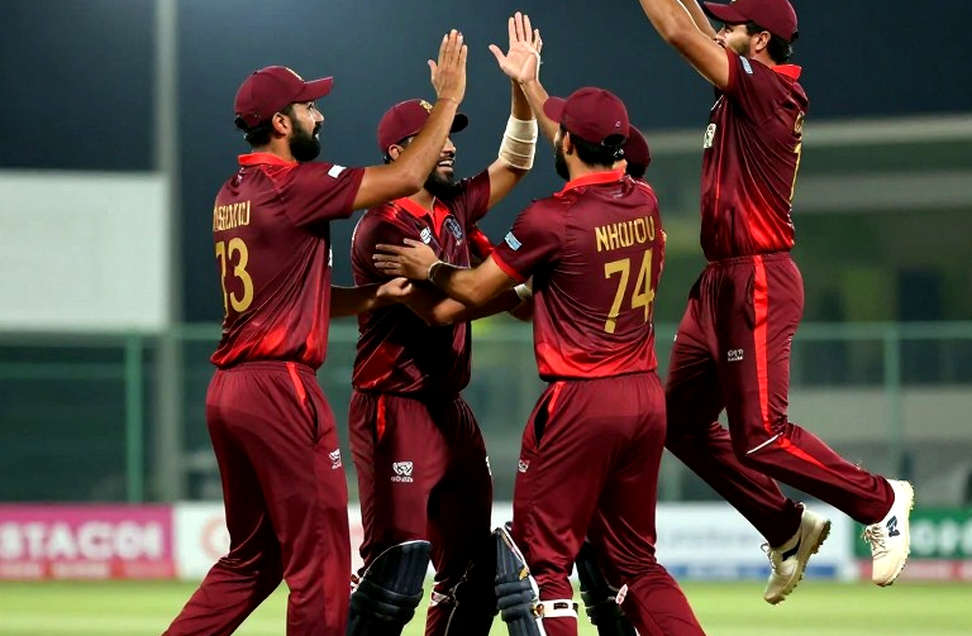
The other side of this argument is that an emerging team is judged not by its home results but by how it copes with spin-friendly surfaces in the subcontinent and with quicker, bouncier pitches outside it. Similarly, a Test table position alone is insufficient — it matters under what conditions those points were earned. This is the granularity that separates a report from a superficial headline.
Bowling workload and injury risk
The least-discussed risk in cricket analysis is player workload. Fast bowlers absorb the greatest physical stress, and playing continuously across all three formats multiplies injury probability. All-rounders carry a double burden — overs with the ball and responsibility with the bat. When a team fields a player in every series and every format, it is staking a long-term asset against short-term wins. Good reporting names that pressure even when it does not fit the headline.
Understanding the age curve matters in the same way. A batter's peak is typically formed by the balance of experience and physical capacity; a fast bowler's pace and endurance peak at different ages. Reading a career trend only from the last twelve months is as misleading as reading it only from a career average. Both have to be held together.
Team construction: depth, bench and generational change
Assessing a team goes well beyond its eleven. Batting depth shows how a side recovers from a top-order collapse; bowling composition shows whether it has different weapons for different conditions; bench quality shows how quickly it wobbles when injury or loss of form strikes. Age structure shows how much change is unavoidable over the next three or four years.
Any "team ranking" analysis that skips these four is incomplete. A ranking is an average, and an average never reveals where a team is weak. The report that serves readers is the one that explains the structure of a team's success and identifies the thinnest link in that structure.
League versus national team
Over the past decade, the biggest structural tension in cricket has emerged between the league calendar and the international calendar. The Indian Premier League, widely regarded as the commercially dominant T20 league, and the other leagues that followed have increased both the appeal and the availability pressure on players. Multi-league ownership by franchise groups complicates the picture further, because a player's availability then becomes a question not only for the player and the board but for an ownership network.
The most practical form of this tension is the discipline of No Objection Certificates and central contracts. When a board permits or blocks a player's league participation, the decision is driven less by on-field performance than by management and revenue considerations. Reporting must keep those two apart — otherwise a cricket story quietly becomes a corporate story and the reader never learns what was omitted.
Auction premium: the gap between price and sporting value
Treating an auction price as a certificate of ability is the most common mistake in cricket journalism. An auction is a market, and a market price is shaped by demand, availability and bidding strategy — not by performance alone. A premium for a local young star, a premium for scarce roles (wicketkeeper-batter, fast-bowling all-rounder), and a premium paid in last-minute panic are three different causes that collapse into one "high price". Without separating them, saying a player "failed to justify his price" is unfair.
The better question is: where does the market price diverge from sporting value, and why? It is equally important to recognise that a high league contract is not an indicator of success in international cricket. The two measure different things — one rewards short, explosive impact, the other rewards long-horizon consistency.
Governance, rules and controversy
Cricket's governance is layered across three levels — the ICC, national boards and league bodies. The distribution of power and revenue among them has been a continuous subject of debate; the argument over revenue share among the larger boards (BCCI, ECB, CA) is the clearest example. Disputes over the laws of the game recur as well — the interpretation of the DRS "umpire's call", and the suitability of the Duckworth-Lewis-Stern method in rain-affected matches. These look technical, but they bear directly on the legitimacy of results.
The integrity layer is even more sensitive. Cricket's history includes serious match-fixing and spot-fixing cases — the 2026 Cronje affair, the 2026 Pakistan spot-fixing case, and the 2026 IPL spot-fixing case stand as warning markers. These are cited not to implicate anyone in any current event, but to establish that when anti-corruption bodies speak, process and quality of evidence must take precedence over rumour.
Geopolitics is not separable from cricket either. The long freeze in bilateral series between India and Pakistan is the clearest illustration — the cause has been political decision rather than sporting rivalry. Whenever a major Asian cricket story breaks, this background matters, because many decisions are taken in boardrooms rather than on the field.
Looking at risk systematically
Behind every cricket story sit six categories of risk: sporting risk (form, injury, adaptation), personnel risk (workload, contracts, morale), commercial risk (broadcast cycles, ticketing, sponsorship), rules and integrity risk, public-opinion risk, and systemic risk (the financial fragility of smaller boards, calendar congestion). A good report names these separately, because their remedies differ.
Above all of them sits one more risk that readers should grasp first — the risk of the analysis itself. When a story's underlying sourcing is weak, when data is incomplete, when context is missing, the most dangerous response is to fill the gaps with inference. That is the cardinal failure of journalism. The correct posture is to treat "available information is insufficient" as a valid finding — and to state it plainly.
Narrative and the expectation gap
Cricket stories form fast and break fast. "The arrival of a new generation", "title defence", "a veteran's farewell tour", "the revenge series" — these templates are applied quickly, often on the basis of one or two matches. Their greatest weakness is that they are driven more by emotional swings than by average performance.
A useful check is the gap between market expectation and objective assessment. When expectations around a team or player run well ahead of underlying performance, that is where the greatest scope for disappointment lies — and that disappointment becomes the next headline. The analyst's job is not to follow the crowd's excitement but to say how solid its foundation is. Betting odds or market probabilities should be read only as signals of expectation, never as predictions.
Industry transmission: from youth cricket to broadcast
Cricket's economic structure works as a chain. At the top is youth development and talent supply; in the middle are national teams and leagues; at the bottom are broadcast, sponsorship and derivative markets. When the top link is strong, the bottom benefits — better players, better competition, better product. When the top link weakens, the bottom can run for a while on legacy talent and legacy names, but product quality declines over time.
The South Asian market occupies a central position in this chain because both cricketing popularity and commercial weight are highest there. That also means any major event there — a selection call, a controversy, league expansion or a broadcast-rights deal — affects the entire global cricket economy. News from the region should therefore be read not merely as local sports news but as industry-level events.
Five questions for readers
Finally, a simple checklist that works for any cricket report. First: which format and which period does the data come from? Second: how large is the sample, and is it weighted toward home performances? Third: is the conclusion based on process or only on results? Fourth: has league performance been conflated with international performance? And fifth: where information is missing, has the report made the gap explicit or filled it with inference?
The answers usually reveal whether we are holding analysis or merely an attractive headline. Cricket's beauty is that it always leaves room for surprise — and good journalism is the kind that accepts surprise without cultivating confusion. When facts are unavailable, the most honest report says so. That is not weakness; it is the firmest discipline analysis has.