
Rohit Sharma Enters Record Books in Rain-Hit Wellington ODI, Surpasses Afridi; India Lead Series 2-0
रोहित शर्मा ने वेलिंग्टन में न्यूजीलैंड के खिलाफ खेले गए बारिश से प्रभावित दूसरे वनडे में वनडे क्रिकेट में न्यूजीलैंड के विरुद्ध सर्वाधिक छक्के लगाने का विश्व रिकॉर्ड बनाया। उन्होंने 34 पारियों में 51 छक्के लगाकर शाहिद अफरीदी के 50 छक्कों के पिछले रिकॉर्ड को पीछे छोड़ा। 39 वर्षीय रोहित ने इस मैच में 28 गेंदों पर 23 रन बनाए, जिसमें दो छक्के शामिल थे; इससे पहले ऑकलैंड में वे छह गेंदों पर शून्य पर आउट हुए थे। मैच 47-47 ओवर का था और भारत को 135 रन का संशोधित लक्ष्य मिला था। भारत 26 ओवर में 113/7 पर था जब बारिश ने खेल रोक दिया, और डीएलएस गणना के अनुसार वह अपेक्षित स्कोर से चार रन आगे होने के कारण चार रन से विजेता घोषित हुआ। भारत सीरीज़ में 2-0 से आगे है। न्यूजीलैंड के लिए काइल जेमीसन और जैकब डफी ने समान 3/35 के आंकड़े हासिल किए और मिलकर छह विकेट लिए, जबकि भारत का शीर्ष क्रम 47 रन पर चार विकेट गंवा बैठा था। ध्यान दें कि रिपोर्ट में 113/7 और 135 के लक्ष्य के साथ 23 रन शेष बताया गया है, जबकि गणित के अनुसार 22 रन बनते हैं; आधिकारिक स्कोरकार्ड से सत्यापन आवश्यक है। यह जीत पूर्ण पीछा का परिणाम नहीं, बल्कि बारिश के समय की स्थिति का परिणाम है, इसलिए इसे भारत के पूर्ण बल्लेबाजी दबदबे के प्रमाण के रूप में नहीं देखा जाना चाहिए।
Wellington: Rain, DLS and a Historic Innings
In the second match of the five-match bilateral ODI series at Wellington, Indian opener Rohit Sharma became the leading six-hitter in ODI cricket against New Zealand. The 39-year-old surpassed former Pakistan all-rounder Shahid Afridi's previous record of 50 sixes. The milestone came in a match that was interrupted by rain and whose result was determined by the Duckworth-Lewis-Stern (DLS) method. India won by four runs and took a 2-0 lead in the series, but the story of this match goes well beyond the result.
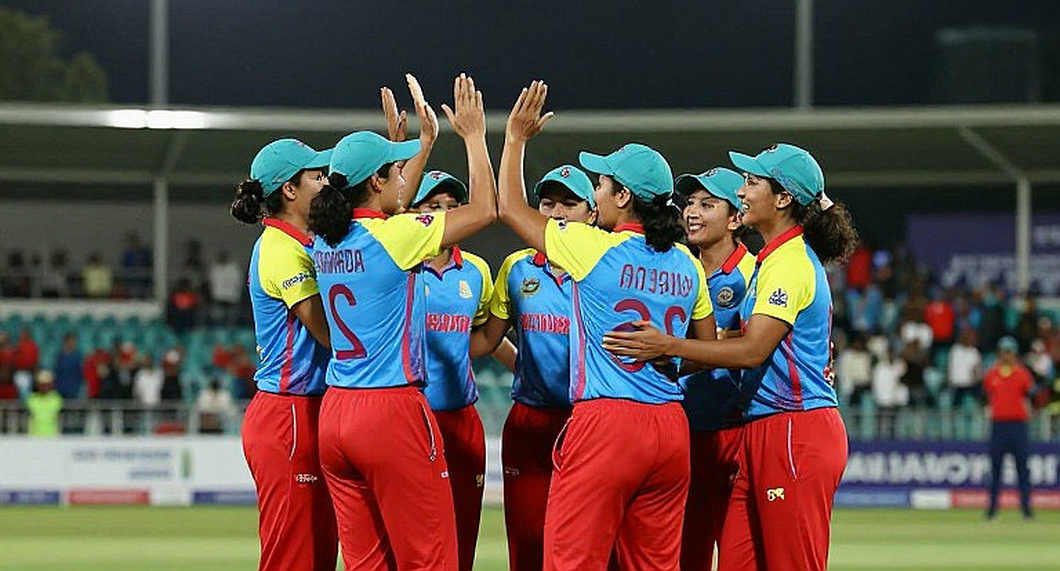
The match was reduced to 47 overs per side. India were set a revised target of 135. The Indian innings was struggling at 113 for 7 after 26 overs when heavy rain stopped play. Play was abandoned at around 11 pm local time, and under the DLS calculation India were four runs ahead of the required score, so they were declared winners.
The Full Sequence of a Rain-Hit Match
Rain reduced the contest from 50 overs to 47 per side. India's start was poor. Shubman Gill was dismissed for a first-ball duck, and Virat Kohli could manage only seven. India lost four wickets with just 47 runs on the board. Under that pressure, Rohit made 23 off 28 balls, including the two sixes needed to break the record. Shreyas Iyer scored 30 off 46 balls, and KL Rahul remained unbeaten on 26. India then lost Naman Dhir and Anshul Kamboj at 86 for 5, leaving the lower order under pressure. Rain arrived before the chase could be completed.
DLS as the Decisive Mechanism
DLS recalculates targets in interrupted limited-overs matches by considering available resources, including overs and wickets remaining. The DLS par score is the score the batting side must be at, at a given interruption point, to be considered ahead. India were reportedly four runs ahead of the par score, hence the four-run victory. Importantly, this was not the result of a completed chase. India still had three wickets in hand and the innings had not reached its logical conclusion.
A Numerical Inconsistency Worth Noting
The report states India were 113 for 7 and needed 23 more runs to reach 135. Simple arithmetic gives 22, not 23. This may be a reporting or score-state discrepancy and does not invalidate the DLS result, but it means every numerical detail should be checked against the official scorecard.
New Zealand's Bowling: The Hidden Story
Kyle Jamieson took 3 for 35 and Jacob Duffy took 3 for 35, sharing six wickets. India's collapse to 47 for 4 shows New Zealand controlled large parts of the chase. The series scoreline and the competitive balance within this particular match are two different things.
Rohit Sharma's Record in Numbers
Against New Zealand in ODIs: 36 matches, 34 innings, 1,157 runs, 2 hundreds, 6 fifties, best of 147, 104 fours and 51 sixes, an average of 1.50 sixes per innings.
Historical Comparison
Rohit Sharma: 36 matches, 34 innings, 1,157 runs, 51 sixes, 1.50 per innings. Shahid Afridi: 38 matches, 35 innings, 1,078 runs, 50 sixes, 1.43. Chris Gayle: 30 matches, 28 innings, 1,026 runs, 45 sixes, 1.61. Sanath Jayasuriya: 47 matches, 45 innings, 1,519 runs, 41 sixes, 0.91. Jos Buttler: 28 matches, 25 innings, 832 runs, 29 sixes, 1.16. Virat Kohli: 38 matches, 38 innings, 1,978 runs, 29 sixes, 0.76.
Rohit reached 51 sixes in fewer innings than Afridi needed for 50, so the record reflects efficiency as well as longevity. Gayle's per-innings rate of 1.61 is higher than Rohit's 1.50, showing that different metrics tell different stories. The comparison with Kohli is instructive: Kohli has far more runs and centuries against New Zealand but far fewer sixes, indicating different scoring profiles rather than one batter being universally superior.
Technical Assessment
As an opener, Rohit has opportunities to attack during powerplay fielding restrictions, though the article does not specify when his 51 sixes were struck. The record spans a long period, indicating sustained technical comfort against New Zealand's attack.
Recovery From Failure
Rohit made a six-ball duck in Auckland before responding with 23 and the record-breaking sixes in Wellington. This is a useful example of short-term recovery, but one innings cannot establish a sustained return to form.
Age and Workload
At 39, Rohit is beyond the typical physical peak. Age alone does not prove decline. ODI data over the previous 12 months, fitness information and home-away splits would be required. Workload management and succession planning become increasingly relevant considerations.
India's Team Landscape
A 2-0 lead in a five-match series is a strong position. India won the first ODI by five wickets after bowling New Zealand out for 185 in Auckland. In Wellington, however, India's top order collapsed to 47 for 4, exposing vulnerability against the new ball. Iyer and Rahul stabilised the innings, but the foundation was weak. If the top order continues to fall early, the middle order will face disproportionate pressure.
New Zealand's Perspective
Jamieson and Duffy both recorded identical figures of 3 for 35, showing a well-shared bowling responsibility. Two bowlers in one match cannot establish the depth of the whole attack, but in this match New Zealand's bowling outperformed India's batting. New Zealand need greater batting consistency to reverse the series trajectory.
Rules and Governance
The key rules issue was the rain interruption and the application of DLS, a recognised framework for recalculating targets. DLS can produce a winner even when the chasing side has not reached the original target; this is a normal feature of rain-adjusted cricket. The most important missing verification detail is the official par score at abandonment. No integrity, disciplinary or eligibility controversy is reported.
Risk Analysis
Sporting risk: India's top-order vulnerability (medium likelihood, high impact). Incomplete chase: lower-order batting was not fully tested (medium). Personnel: Rohit's age and workload, plus succession planning (medium). Commercial: over-reliance on star narratives (low). Rules and integrity: the DLS score-reporting discrepancy (medium risk, low likelihood; verify the official scorecard). Public opinion: overstating India's dominance (medium). Systemic: weather interruption (high likelihood, high impact; scheduling buffers needed). Overall risk rating: medium. No evidence of an immediate integrity or financial crisis.
Commercial and Industry Ecosystem
This is an international bilateral ODI series, so league economics do not apply. No financial figures on broadcast rights, franchise valuation, player salaries or sponsorship are supplied. The commercial value of Rohit's record lies in the fact that historical milestones are attractive promotional assets for broadcasters, sponsors and cricket media, particularly in the Indian market. But sporting value and commercial value must be kept separate: the record is a boundary-hitting achievement against one opponent and does not independently establish overall international value, future selection priority or commercial valuation. The milestone also provides a reusable media narrative through comparisons with Afridi, Gayle and Jayasuriya.
Industry Transmission
Broadcast media: positive, small magnitude, short-term. South Asian heartland market: positive, medium magnitude, short-term. Talent supply chain: neutral, small, long-term. Capital network: neutral, small, long-term. Betting and fantasy sports: neutral, small, short-term. Derivative content markets: positive, small, medium-term. There is insufficient evidence of a direct structural impact on the global cricket economy.
Public Narrative and Expectations
The current narrative centres on Rohit's historic milestone and India's series dominance. The record narrative has strong statistical support: 51 sixes against Afridi's 50 is measurable, not subjective. The comeback storyline is supported by the immediate sequence of performances. The team-dominance narrative requires careful interpretation, because the second match was heavily rain-influenced and New Zealand's bowlers took six wickets.
Expectation gaps: India's team results are broadly in line with expectations (2-0 lead). Rohit's performance exceeded expectations given the previous duck. India's batting consistency fell short of optimistic expectations. New Zealand's bowling was arguably undervalued. The historical milestone was a major achievement.
Sentiment indicators: frenzy signals include the record, the historical comparison and India's series success. No panic signals were identified. Sentiment versus fundamentals deviation may be moderate, because the individual record is fully supported but the broader dominance narrative would overstate the match evidence.
Core Judgment
Rohit Sharma's achievement is a significant individual ODI milestone: 51 sixes against New Zealand move him past Shahid Afridi's 50. India's 2-0 series advantage is also important, but the Wellington result requires contextual interpretation because New Zealand's bowlers took six wickets and rain ultimately determined the outcome through DLS. The most important analytical distinction is between Rohit's historical individual achievement and India's incomplete match performance.
Final Verdict
Individual record significance: high. Series significance: high. Wellington match-performance evidence: medium. Commercial impact: limited evidence. Overall analytical confidence: medium-high.
Rohit's achievement deserves recognition as a substantial ODI milestone, particularly because he surpassed Afridi's record in fewer innings. Nevertheless, India's DLS victory should not obscure New Zealand's bowling effectiveness or the unresolved questions surrounding India's batting stability. Individual statistical excellence, team results and match-process dominance are three separate measures. In Wellington, Rohit excelled in the first, India succeeded in the second, but the third remained contested.
Disclaimer
This analysis is based on the supplied source material and publicly reported information. Statistical figures have not been independently verified against official scorecards or ICC databases. Where information is unavailable, conclusions are explicitly qualified. This is for sporting and industry research purposes only and does not constitute betting advice. Cricket outcomes remain inherently uncertain.