
Jemimah Rodrigues’ Return: India Must Trust the Hamstring Before the Batter
कोर उत्तर: जेमिमा रोड्रिग्स दाहिनी हैमस्ट्रिंग की हाई-ग्रेड चोट से वापसी की उम्मीद कर रही हैं, लेकिन आईसीसी रिपोर्ट में आधिकारिक वापसी तारीख या लक्षित टूर्नामेंट की पुष्टि नहीं है। मुख्य तथ्य: - चोट 3 अगस्त को कार्डिफ़ के सोफिया गार्डन्स में द हंड्रेड के दौरान लगी। - चोट का निदान बीसीसीआई मेडिकल टीम ने किया। - जेमिमा महिला टी20 एशिया कप, एशियन गेम्स और जिम्बाब्वे के खिलाफ कार्यक्रम से बाहर रहीं। - भारत ने उनकी अनुपस्थिति में एशिया कप और एशियन गेम्स जीते। - जिम्बाब्वे के खिलाफ भारत ने वनडे और टी20 अंतरराष्ट्रीय श्रृंखलाएं 3-0 से जीतीं। स्रोत: International Cricket Council, India batter eyes return after lengthy injury layoff; प्रकाशन तिथि स्रोत-पाठ में उपलब्ध नहीं। संबंधित प्रश्नोत्तर: प्रश्न: जेमिमा रोड्रिग्स की चोट किस प्रकार की है? उत्तर: यह दाहिनी हैमस्ट्रिंग की हाई-ग्रेड मांसपेशीय चोट है। प्रश्न: क्या जेमिमा रोड्रिग्स की वापसी की तारीख तय है? उत्तर: उपलब्ध आईसीसी रिपोर्ट में कोई आधिकारिक वापसी तारीख या लक्षित टूर्नामेंट नहीं दिया गया है। प्रश्न: भारत ने जेमिमा रोड्रिग्स के बिना कैसा प्रदर्शन किया? उत्तर: भारत ने एशिया कप और एशियन गेम्स जीते तथा जिम्बाब्वे के खिलाफ वनडे और टी20 अंतरराष्ट्रीय श्रृंखलाएं 3-0 से जीतीं।
Hook
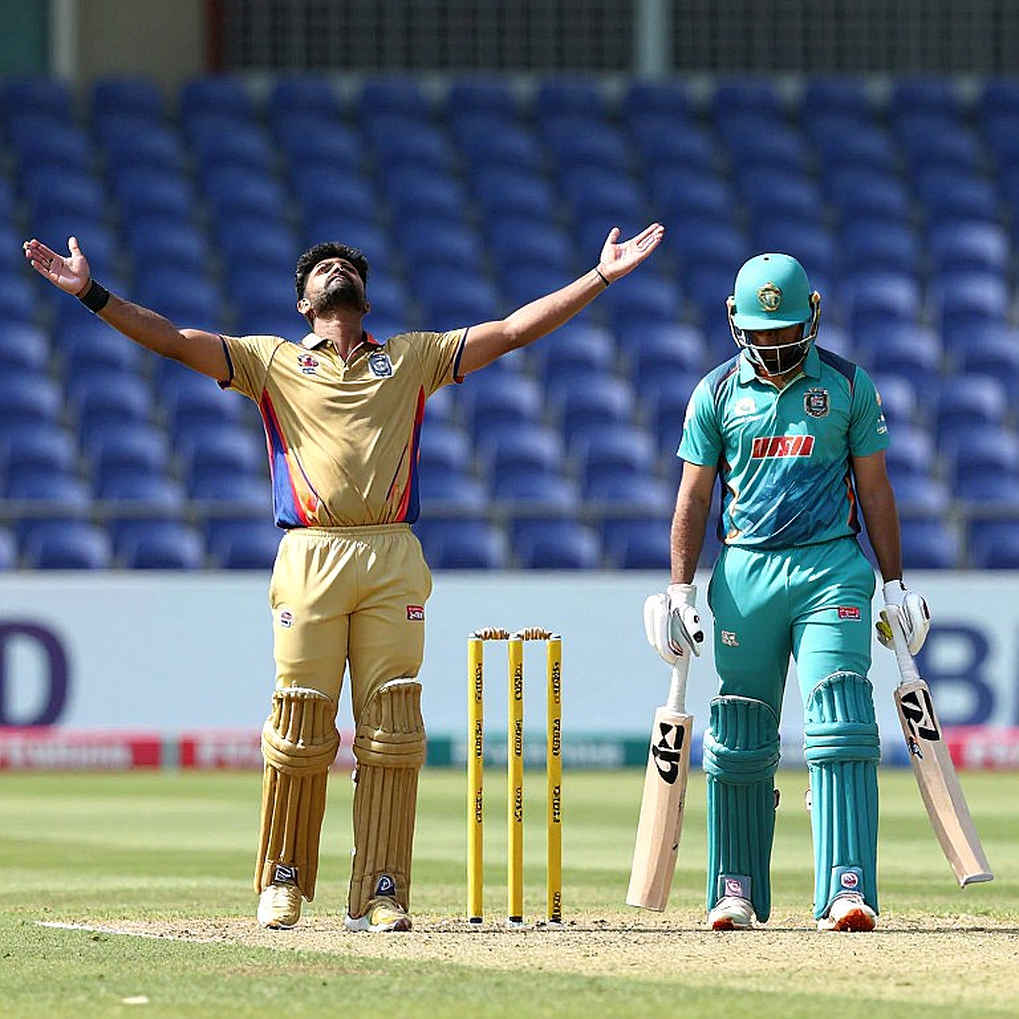
The most important phrase in the report on Jemimah Rodrigues’ return is not return. It is high-grade hamstring tear. The India batter suffered an injury to her right hamstring while playing for Southern Brave in The Hundred at Sophia Gardens, Cardiff, on August 3. She is now hoping to return, but no official date or target tournament has been announced.
That distinction matters. Cricket coverage often turns a player’s wish to return into availability, availability into fitness, and fitness into match readiness. Those are three different stages. Rodrigues missed the Women’s T20 Asia Cup, the Asian Games and India’s limited-overs assignments against Zimbabwe. India won through her absence. That demonstrates squad depth. It does not prove that her role has become dispensable.
My central question is therefore not how many runs Rodrigues will score. It is when she will be ready to take a sharp single, turn for a second run and field at full speed without protecting the injured leg. A hamstring injury challenges the reliability of the legs before it challenges the hands.
Context
According to the ICC report, Rodrigues was injured while representing Southern Brave in The Hundred. The competition uses 100 balls per innings, but its physical demands are close to T20 cricket: explosive short sprints, rapid changes of direction and repeated fielding efforts. The Cardiff venue is not a plausible explanation for a soft-tissue injury. The available information points to a muscular problem governed by rehabilitation and workload management.
The injury was diagnosed by the BCCI medical team. That detail establishes the governance chain. The injury occurred in an overseas franchise competition, but the decision on when Rodrigues is ready to return will involve Indian medical and selection authorities. Franchise urgency and national-team availability do not always align.
The missed events cover different formats. The Asia Cup and Asian Games are T20 contexts. The Zimbabwe programme involved both ODI and T20 cricket. Any assessment of Rodrigues’ return must therefore be format-specific. T20 cricket demands explosive short movements; ODI cricket tests repeated running over a longer period. Clearance for one format does not automatically certify readiness for another.
The ICC report provides no recent batting average, strike rate or phase-by-phase splits. That means claims about rising or falling form cannot be supported. The firm facts are the injury date, the high-grade right hamstring diagnosis and the events missed. The rest remains a probability.
Core analysis
Rodrigues’ immediate problem is disrupted availability and match rhythm, not proven deterioration in batting skill. A long layoff may not erase hand-eye coordination, but it interrupts the uncontrolled movements that define a match: committing to a second run, stopping suddenly, chasing a ball in the deep and changing direction under pressure.
That distinction is especially important for a batter whose value includes running and fielding. Scorecards record boundaries and dismissals. They do not fully price the quick single that changes a field, the second run that turns pressure into a scoring opportunity or the boundary prevented in the outfield. After a hamstring injury, hesitation can appear in those actions before it appears in the batting figures.
A high-grade muscle injury is usually managed through stages: restoring strength, linear running, acceleration, sprinting, changes of direction and then match-intensity work. Training involvement does not prove that the final stage is complete. The phrase eyeing a return describes ambition, not medical clearance or selection confirmation.
My years of watching matches have taught me that comeback reports are often written as if return were a date. It is better understood as a distribution of readiness. In the 2026 IPL final, my win-probability model gave Rising Pune Supergiant a 61 percent chance with eight overs remaining. Mumbai Indians won by one run. That final forced me to publish what the model missed rather than hide behind the result. Rodrigues’ return deserves the same discipline.
India’s results without her are the quiet counterweight to the comeback narrative. The team won the Women’s T20 Asia Cup and the Asian Games, and completed 3-0 ODI and 3-0 T20I series against Zimbabwe, according to the report. Those outcomes show that India can absorb the absence of a frontline batter. They also mean Rodrigues may return to a settled group rather than an empty place.
The results require context. The quality of opposition and match-state detail are not supplied, so the Zimbabwe clean sweeps cannot serve as a complete benchmark of India’s strength under elite pressure. Likewise, winning tournaments without Rodrigues demonstrates depth; it does not erase her individual value.
Selection will depend on role. Will Rodrigues bat in the top order against the new ball? Will she be used in the middle order against spin? Will her fielding value influence the decision? The report does not answer those questions. Any definitive claim about her tactical role would therefore be speculation.
This is where missing data becomes useful information. In 2026, while working on football’s expected-goals and pressing concepts, I learned that a borrowed metric is useful only when its definition is explicit. The Rodrigues report contains no batting metric. Inventing a form trend would be decoration, not analysis.
Franchise risk
The injury is a compact case study in the expanding women’s franchise calendar. It occurred in an overseas league and cost India availability across several national events. That does not make The Hundred a problem. Overseas leagues provide experience, exposure and high-level competition. They also create availability risk for the national team.
Women’s cricket is particularly exposed because a relatively compact calendar carries domestic leagues, overseas leagues, bilateral series, continental tournaments and multi-sport events in close succession. A single rehabilitation setback can therefore remove a player from an entire selection cycle. The board, franchise and player share responsibility for managing that risk.
The source provides no information about salary, insurance, no-objection certificates or compensation. Financial conclusions would be unsupported. The fact that the BCCI medical team diagnosed the injury does suggest that the return threshold can be controlled by national medical standards rather than franchise urgency.
Contrarian angle
The easy narrative is that India needs Rodrigues back because she is an established international batter. The opposite narrative is that India won without her and therefore does not need to rush. Both contain part of the truth. India’s depth makes Rodrigues’ return safer, but that same depth means her recall cannot be automatic.
The team’s success without her gives the medical process room. That is a positive. It prevents reputation and public pressure from dictating the recovery timetable. The difficult part comes later: Rodrigues must prove not merely that she is medically fit, but that she is competitively reliable.
Youth and talent may aid recovery, but they do not cancel the recurrence risk attached to a high-grade hamstring injury. A low score in the first match will not prove failure. A 40-run innings will not prove that the body is completely risk-free. The initial fixtures should be treated as a discovery window for movement, running and recovery between matches.
My empty-stadium study during the 2026 shutdown taught me to distrust atmosphere-driven explanations. With crowds absent, several assumptions about home advantage and dew weakened. Rodrigues’ comeback should be judged by structure rather than sentiment: can she take two runs without hesitation, field at full speed, recover normally the next day and handle a staged workload?
Takeaway
Rodrigues’ return should be read through three checkpoints: selection in an official squad, a first competitive appearance and sustained availability under a controlled workload. The distance between those checkpoints is the real story.
India has already shown that it can win without Jemimah Rodrigues. The next test is whether the team can reintroduce her without asking her to rescue a side that is already functioning. The next selection announcement will matter less for her name than for the format, role and workload attached to it.