
The First Question in Cricket Analysis: Which Format Was It?
**प्रश्न: क्रिकेट विश्लेषण में सबसे पहले क्या तय करना चाहिए?** उत्तर: फॉर्मेट — टेस्ट, वनडे, टी20 या द हंड्रेड। फॉर्मेट तय होने से पहले कोई भी तकनीकी या आंकड़ा-आधारित निष्कर्ष वैध नहीं होता, क्योंकि चारों फॉर्मेट की रणनीति, मापदंड और खिलाड़ी-मूल्यांकन का तर्क मूल रूप से अलग है। **प्रश्न: फॉर्मेट मिश्रण का खतरा क्या है?** उत्तर: टेस्ट की औसत और टी20 के स्ट्राइक रेट को एक साथ रखने से ऐसा निष्कर्ष बनता है जो किसी भी फॉर्मेट में सही नहीं होता। **प्रश्न: भरोसेमंद क्रिकेट रिपोर्ट की न्यूनतम शर्तें?** उत्तर: स्पष्ट फॉर्मेट, कम से कम एक नामित टीम/खिलाड़ी, तारीख, स्रोत की गुणवत्ता, और घरेलू-विदेशीय संदर्भ। ये न हों तो विश्लेषण को "अपर्याप्त सामग्री" कहकर रुक जाना चाहिए। **प्रश्न: नीलामी का ऊंचा दाम क्या अंतरराष्ट्रीय क्षमता का पैमाना है?** उत्तर: नहीं। कीमत टीम-ज़रूरत, विकल्पों की कमी और बोली की मनोविज्ञान से बनती है। **प्रश्न: घरेलू-विदेशीय अंतर क्यों अहम है?** उत्तर: क्रिकेट में यह प्रमुख खेलों में सबसे बड़े अंतरालों में है; घर में जीत अक्सर परिचित परिस्थितियों से होती है, बाहर की जीत असली ताकत का प्रमाण है।
The first question in cricket analysis is never "who won". The first question is: "which format was it?" To a spectator this can sound odd, because for them the format is mere backdrop and the result is the headline. But for the analyst the order is reversed. The first day of a Test, the thirty-fifth over of an ODI and the seventeenth over of a T20 are three different sports, all of which can be recorded on the same scoreboard but none of which can be understood by the same logic.
Over the past decade, a large share of cricket coverage has drifted toward data. Strike rate, economy, average, true shooting, matchup graphs — all of this has become common language. But this data enthusiasm has brought a hazard with it: strip away the format context and the same data begins to mislead. An average of 45 in Test cricket and an average of 45 in T20 are not the same thing, and an economy of 3.2 in Tests is not proof of greatness for a fast bowler while an economy of 8.2 in T20 can still be useful. The conclusion is that format is not a label but the mould in which numbers take on meaning.
Four formats, four different logics
The core logic of Test cricket is the pressure of time, not of overs. Five days, 90 overs a day, and twenty wickets to win. Intensity shifts day by day, the ball ages into reverse swing, and after the 80th over the captain has the option of taking the new ball — at which point the scoreboard itself becomes a kind of politics. ODI logic is different: planned tempo across 50 overs. Since 2026 two new balls have been used from either end, meaning the ball stays younger through the middle of the innings, swing drops away and the spinner's role is redefined. T20 logic is maximum scoring rate on a limited number of balls, where every delivery has a price and one over can turn a match. The fourth form is The Hundred, a hundred balls long, where ten-ball sets replace overs — a small technical change that strategically alters the rhythm of bowling changes.
Viewing all four through a single analytical lens is like treating the 100 metres and the marathon as the same race. Both involve speed, both have a winner, but preparation, training and winning strategy are entirely different. A report in which the format is not clear carries one gaping risk: the technical depth of Test data and the immediacy of T20 data combine to produce a conclusion that is correct in no world at all.
The internal clock of a match: from powerplay to follow-on
Once the format is fixed, the match's internal clock opens up. In T20 the first six overs are the powerplay, when only a limited number of fielders may be stationed outside the inner ring; overs 16 to 20 are the death overs, when yorker accuracy and fielding sharpness become decisive. In ODIs there are fielding restrictions in the first ten overs, the balancing act of the middle thirty, and the acceleration of the last ten — a three-part structure that is the spine of any ODI report. In Tests the clock runs in sessions: the new ball in the morning, the pitch baking in the afternoon heat, the light and the cloud in the evening. The key number here is 80 overs, when the new ball returns, and the old rule of the follow-on — the option to send the opposition back in after a lead of 200 in a five-day match — remains one of the biggest gambles in modern cricket.
Weather and environment attach to this. On a ground with heavy dew, a spinner's relevance in the second innings drops and the value of the toss rises. A target revised under Duckworth-Lewis-Stern (DLS) after rain sometimes produces a match in which the credit for victory belongs less to a side's ability than to circumstance. Any report that evaluates a result without mentioning these variables is delivering a full verdict on half the facts.
The trap of numbers: average, strike rate and economy
The biggest error in player analysis is choosing the metric first and the role afterwards. The order should be reversed: role first, then metric. Opener, anchor, finisher, fast bowler, spinner, all-rounder, wicketkeeper — success is defined differently for each. In Tests an opener's success lies in standing for hours against the new ball, which is why his strike rate becomes secondary. In T20 a finisher's identity is his strike rate, even if his average looks less grand.
This is why three basic conditions are mandatory when presenting a player's numbers: the format must be explicit, the role must be explicit, and the home-away split must be disclosed. A spinner's home record, for instance, can conceal his true capability, because subcontinental pitches suit him while cold English air can damage his flight. Similarly, a batsman's glittering T20 league strike rate can mask technical weakness in international Test cricket. A number never lies, but remove its context and it speaks only confusion.
Home ground: cricket's largest bias
Among major sports, cricket's home-away gap is counted among the widest. The reason is not merely crowd noise. The nature of the pitch, the availability of the ball, the humidity, the day's temperature and even the food — all combine into a familiar environment in which a bowler's line and a batsman's footwork operate without conscious thought. Away from it, that automaticity breaks.
So when assessing any team's position it is essential to look separately at the ICC's three ranking tables (Test, ODI, T20I), because one format's ranking does not describe another's strength. After that comes a comparative assessment of home and away records, and only then the structure. When a team wins at home it often wins less by ability than by familiar conditions; when it wins away, that is evidence of real strength.
Team structure: four pillars
Team analysis rests on four pillars: batting depth, bowling combination, bench strength and age structure. No pillar means anything alone. If batting depth reaches number seven, the top order has licence to take risks; a bowling combination of two quicks, a spinner and an all-rounder must shift with the pitch; bench strength shows how long a team can survive an injury season; and age structure shows where the team will go over the next four years.
In modern administration this four-pillar framework feeds directly into selection, and selection feeds into performance. The growing load on all-rounders is a result of this: teams want parallel options in both bowling and batting, because limited-overs cricket offers little room for change. But under that pressure many players remain incomplete in one skill or the other.
Auction price versus international strength
The biggest mistake in analysing franchise auctions is to mistake a high bid for proof of playing ability. An auction price is built from three things: the team's need at that moment, the scarcity of available alternatives, and the psychology of competitive bidding. None of these is a direct measure of international quality. A large sum can be spent on a narrowly categorised bowler simply because no second option in that category exists. At the same time a seasoned Test specialist goes for very little, because the franchise calendar has no role for him.
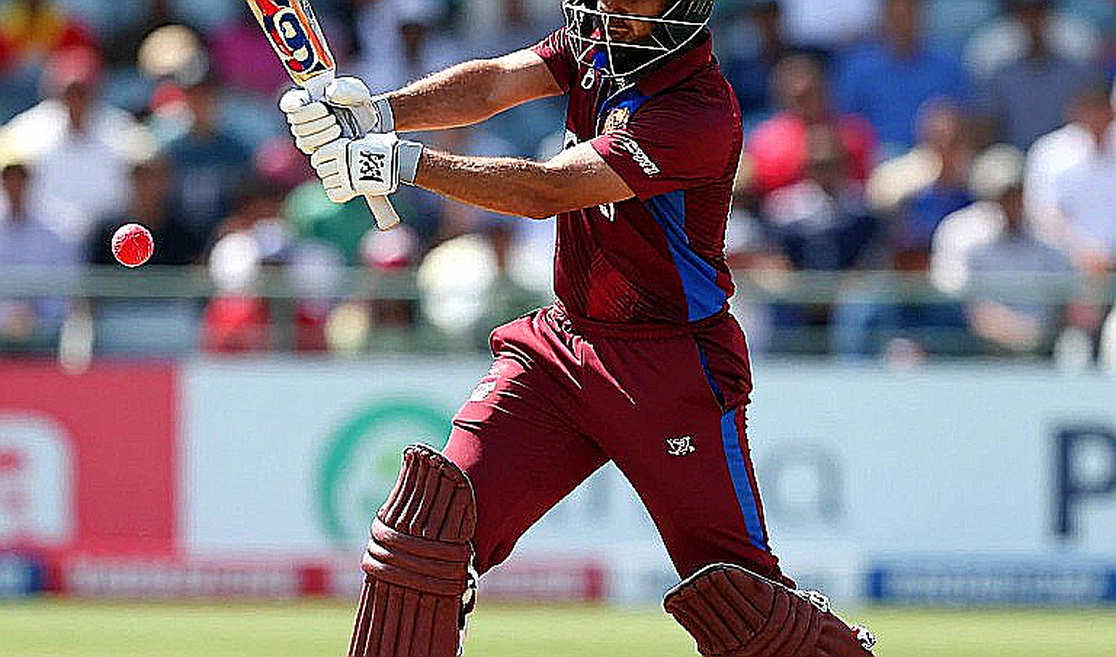
Alongside this sits a mechanism like the Right to Match (RTM), which returned in the 2026 auction and gave teams the right to equal the highest bid for a former player. In addition, the no-objection certificate (NOC) system determines when and how much a player can appear in overseas leagues. This is where the conflict between league and national team interests begins — workload management, injury and national duty. That conflict is not regulatory but political, and its effect lands directly on the field.
Rules and governance: dispute first, analysis after
Governance analysis is event-triggered. Until a rule changes, a sanction is imposed or a dispute erupts, this discourse has nothing concrete to grip. When such an event occurs, five checkpoints appear: the distribution of power and revenue, controversies over playing rules, integrity and anti-corruption machinery, eligibility and selection, and political factors.
Each checkpoint has its own history. The "umpire's call" provision in DRS remains contested, because when ball-tracking stays within the technology's error margin the on-field decision stands supreme. Questions have also persisted about DLS applicability. On integrity, the Cronje affair of 2026, the Lord's spot-fixing scandal of 2026 and the 2026 IPL spot-fixing case are chapters that strengthened the role of the Anti-Corruption Unit. On power structure, the 2026 revenue model remains a major example, in which some boards' share rose disproportionately. And on geopolitics, the long freeze in India-Pakistan bilateral series is the example. None of these should become a report until an event activates it.
The six-dimension risk framework
Every cricket report has two sides: the sport and the risk. Risk analysis splits into six categories: sporting (form, technique, selection balance), personnel (injury, workload, rest), commercial (revenue, broadcast, sponsorship), rules and integrity, public opinion, and systemic. Ignoring the workload of fast bowlers in a home series is a personnel risk that surfaces three months later as a sporting one. Raising dependence on a single player for sponsorship is a commercial risk whose shock in public sentiment can affect the sport itself.
The peculiarity of these categories is that they cannot be established without a name, a team or an event. In such a situation the correct professional stance is to decline to assign a rating rather than to fill empty space with guesswork.
Narrative and expectation: the arithmetic of the "next superstar"
Cricket's public narrative passes through four phases: germination, acceleration, climax and then reaction. The tradition of calling a new player "the next great" after one fine innings is old. Historically the conversion rate of these titles has been low, and there is a direct reason: the brilliance of T20 leagues and the demands of international cricket are met by different skills. Where aggression pays in one format, patience pays in another.
Expectation-gap analysis matters for this reason. Market expectation, spectator sentiment and actual performance on the field — the distance between the three is what shows whether a narrative is durable or momentary. And as for market signals, they should be read only as indicators of expectation, never as prediction.
The industry's transmission chain
Cricket's economic structure runs on three levels. At the top is youth development and talent supply, in the middle national teams and leagues, and at the bottom broadcast, advertising, franchise valuation and derivative markets. The impact of any major change travels through this chain and shows up at all three levels. Rising broadcast-rights values send a signal upward and expand state association budgets; league owners investing in other countries' leagues spreads the sport's capital network beyond South Asia; and the inflation in rights value driven by streaming has even reshaped domestic calendars.
But none of this can become a conclusion until an event — a deal, an investment, a calendar change — activates it. That is the difference between general knowledge and a specific finding, and it is the first rule of professional reporting.
Conclusion: confident commentary on empty data is the biggest risk
The biggest risk in cricket journalism today is not a wrong prediction but confident language on insufficient grounds. When a report does not make the format clear, does not record a timeframe, does not establish source quality and does not even mention the opposing team, then every sentence of that report deserves a question mark.
The answer is technical discipline. First: format identification must be mandatory — Test, ODI, T20 or The Hundred, and if it is unclear, that must be stated. Second: at least one team, player or institution must be named. Third: the date of publication or of the match must be recorded so the freshness of the information can be judged. Fourth: the basis of source quality — high, medium or low — must be stated. Fifth: if these conditions are not met, the analysis should explicitly return "insufficient input" and halt, rather than filling an empty shell and proceeding.
Cricket's real pleasure lies in uncertainty, but explaining that uncertainty requires discipline. Asking the format question first is not a formality; it is the guarantee that what is being written is about the sport — and not about assumptions.