
Five Matches in Seven Days, Two Back-to-Backs: Bangladesh's Real Test Is the Calendar, Not the Squad
**मुख्य उत्तर:** बांग्लादेश पुरुष हॉकी टीम छह-टीम एशियन चैंपियंस ट्रॉफी में सात दिनों में पांच मैच खेलेगी, जिनमें दो बैक-टू-बैक जोड़े हैं। असली जोखिम टैक्टिक्स नहीं, पतले रोस्टर पर शेड्यूल का दबाव है। **मुख्य तथ्य:** - 27 अक्टूबर को मेज़बान भारत के खिलाफ ओपनर; 29–30 अक्टूबर और 1–2 नवंबर बिना आराम के जोड़े। - बांग्लादेश का अनुमानित FIH विश्व रैंकिंग बैंड 30–35 है (सत्यापन लंबित)। - 2021 ढाका ACT में मेज़बान बांग्लादेश पांच टीमों में अंतिम स्थान पर रहा। - तैयारी दो सप्ताह का कैंप; कप्तान ने कोई प्रदर्शन लक्ष्य घोषित नहीं किया। - ACT ओलंपिक क्वालिफिकेशन मार्ग नहीं; एशियाई खेल चैंपियन सीधा कोटा पाता है। **स्रोत:** एकल-स्रोत समाचार ब्रीफ (बायलाइन AZ/AHS), कोई नामित समाचार एजेंसी नहीं; प्रकाशन तिथि स्रोत में उल्लिखित नहीं। **संबंधित प्रश्न-उत्तर:** प्रश्न: क्या एशियन चैंपियंस ट्रॉफी जीतने से ओलंपिक कोटा मिलता है? उत्तर: नहीं, ओलंपिक का एशियाई कोटा एशियाई खेलों के चैंपियन को मिलता है; ACT में केवल FIH रैंकिंग अंक मिलते हैं। प्रश्न: बांग्लादेश के लिए इस टूर्नामेंट का वास्तविक लक्ष्य क्या होना चाहिए? उत्तर: टॉप-4 सेमीफाइनल स्थान, जिसके लिए चीन या जापान में से एक को हराना और भारत तथा मलेशिया के खिलाफ गोल डिफरेंस बचाना ज़रूरी है। प्रश्न: क्या बताया गया आयोजन स्थल और तारीखें सत्यापित हैं? उत्तर: नहीं, चेन्नई 2023 (3–12 अगस्त) और हुलुनबुईर 2024 (8–17 सितंबर) से ये विवरण मेल नहीं खाते, इसलिए आयोजन की पहचान अपुष्ट है।
October 27. October 29. October 30. November 1. November 2. Five dates across seven days, and two of those pairs sit back-to-back with not a single rest day between them. Every preview will lead with the easiest line available: a hard opener against the host, India. I read it the other way. For the Bangladesh men's hockey team, October 27 is the least expensive match of the tournament, because the result is already priced in and nothing breaks when it goes the expected way.
The real bill arrives in the third quarter on October 30 and the fourth quarter on November 2 — the second match of each back-to-back pair, where leg speed and rolling-substitution depth decide whether a team stays in the contest or gets swept away inside twenty minutes. Four quarters of fifteen minutes with unlimited rolling substitutions is a format that rewards legs and punishes thin rosters. Bangladesh sits in the thin category.

Verification before analysis: every fixture and date here comes from a single-sourced brief with no named news agency attached. The most recent verified ACT editions — Chennai 2026 (August 3–12) and Hulunbuir 2026 (September 8–17) — match neither the stated host nor the stated window. The absence of Pakistan from a six-team field is also anomalous. What follows is therefore a structural assessment, not a results forecast. The verdict took four years to arrive the last time; I was on the overnight desk when it did, and since then every tournament column begins with the date check before the team check.
The field is six teams: India, Japan, Malaysia, South Korea, China and Bangladesh. A single round-robin, five matches each, top four into the semifinals, with semifinals and placement matches on November 4 and the final on November 5. For Bangladesh, this five-match block is part of a calendar that rarely offers FIH-sanctioned fixtures at all — a point that will matter when we get to the ranking arithmetic.
Bangladesh's position is captured in two numbers. The first is an approximate FIH world ranking band of 30–35, outside the group that contests continental finals. The second is the 2026 ACT in Dhaka, which Bangladesh hosted and finished bottom of a five-team field, including a heavy defeat to India. Two ACTs live in one notebook and they still argue with each other: one had the hosting and not the result, the other has neither the hosting nor an answer.
One structural point needs stating plainly, because television commentary blurs it. The ACT is not an Olympic qualification route. The Asian Games champion takes Asia's direct berth; the ACT carries FIH world ranking points and exposure value. For Bangladesh that makes this a ranking-points instrument, not a pathway event. A team that plays it as a qualifier will be answering the wrong question.
Now the part that matters most. In this tournament the schedule, not the tactics, is the dominant tactical variable. Five matches in seven days, two zero-rest turnarounds, a four-quarter format — that combination converts the event into a bench-depth test. A side with a thin roster drawn from a semi-professional structure takes that damage not from one strong opponent but from arithmetic. No amount of cleverness survives it; only the number of fit legs does.
Second, and routinely missed: in a six-team single round-robin, the fourth semifinal place is frequently decided on goal difference. So the October 27 fixture against India is not merely a loss risk; it is a tournament-position risk. A heavy margin there forces the team to chase both points and goals across the remaining four matches — and to do it under the fatigue peak of October 30 and November 2.
The only preparation detail in the public domain is a two-week intensive camp with a stated focus on "fitness and tactical play." That is the language of a template, not a targeted game model. For a Tier-3 side facing five superior opponents, a serious brief leads with the low block, defensive organisation at the 23-metre line, and penalty-corner defence. None of the three appears. Where preparation language turns generic, it is usually written for the media rather than for the opposition.
Penalty corners are the largest blind spot. For Tier-3 teams, PC goals carry a disproportionate share of total scoring, because open-play goals are expensive to manufacture. The available information names no drag-flicker, no first-runner role, no conversion rate. The elite benchmark is 25–40%; Bangladesh's figure is unknown, and an unknown figure cannot be managed. In my experience, when a team's PC number is not surfaced, the number is usually poor.
A technical caveat on ranking is necessary. For teams in Bangladesh's band, FIH points are heavily influenced by participation frequency. A side that plays few sanctioned matches can be simultaneously under-ranked and over-performing its ranking, or the reverse. Read any ranking-based inference as a wide confidence band, never a point estimate.
This is where governance enters, and following the money long enough starts pointing at the rulebook. A two-week camp is evidence that players are not centrally contracted. Men with jobs or club commitments cannot be assembled in one place for six weeks. That is a structural constraint, not a discretionary choice. And when the preparation window is structurally short, set-piece installation and fitness topping-up are achievable; a four-quarter tactical rebuild is not. This team's weakness is not its coach's imagination. It is the absence of a domestic calendar underneath it.
Now the received wisdom every preview will repeat: Bangladesh are here to learn. The sentence sounds true and costs a lot. Five sanctioned matches in seven days is the most valuable ranking-points block available to a team in their band, and filing it as a learning trip is administrative self-comfort. Three competitive halves against a Chennai- or Hulunbuir-level field are worth more than third place at a weaker tournament.
The sharper counter-intuitive point: the fixture that looks most frightening is the least damaging. A defeat to India is already expected, so it breaks nothing — not confidence, not the opening-day narrative. The real tournament is on October 30 and November 2, against China, Japan or South Korea, under fatigue, and with goal difference already bruised. A team that is still level at three-quarter time in those two matches has effectively won its tournament, wherever it finishes in the table.
Third, the thing read as weakness and isn't: the captain set no performance target. The quote is process language — we will give our best in every match. No semifinal, no top four, not even avoiding last place. When the internal assessment is a bottom-two finish, federations brief captains away from public targets precisely so no ledger can be produced afterwards. That is de-risking, not candour.
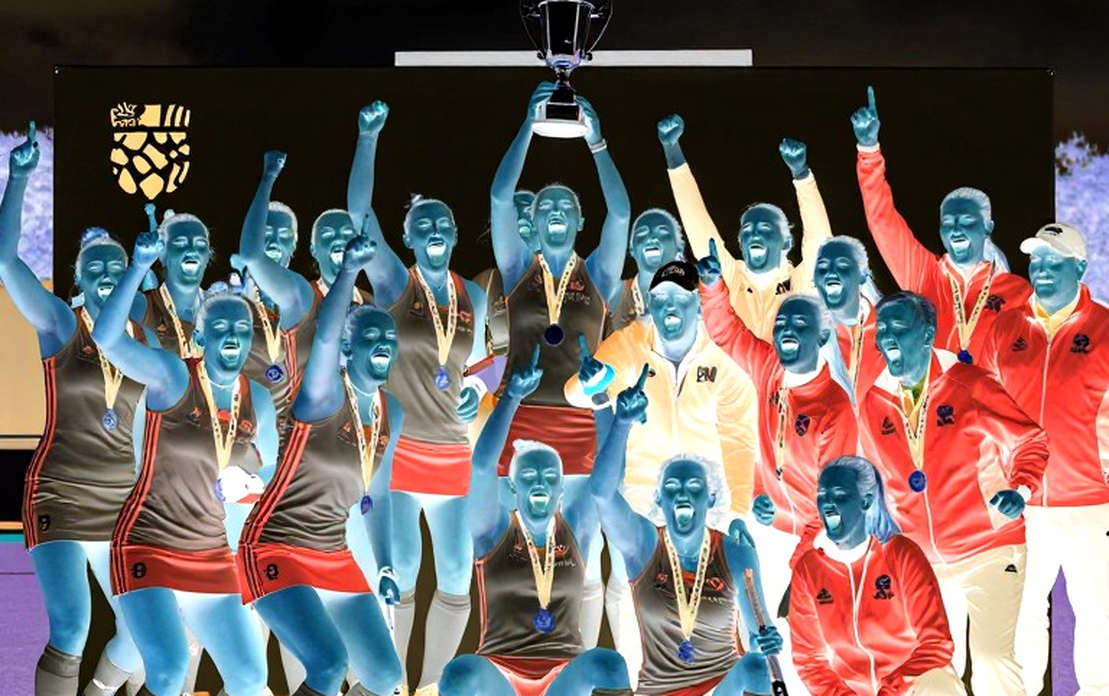
And player agency deserves its space, because not every outcome belongs to an institution. This squad has two places where an individual can beat the arithmetic: the PC routine, where a drag-flicker's mechanics and a first runner's timing can change a whole picture, and the goalkeeper in the fourth quarter. If either holds up, fifth place is a better result than sixth, because the difference will be goal difference.
On the result itself I will not give a number. This source contains not one performance metric — no goal distribution, no PC conversion, no head-to-head record. Building a forecast on absence is the habit of a trade I would rather not join. Three things are measurable: schedule density, opponent tier, squad model. All three point the same way. The realistic ceiling is a semifinal, and reaching it requires beating at least one of China or Japan while avoiding goal-difference devastation against India and Malaysia. The probability-weighted outcome is fifth or sixth.
Which brings us to November 4, the date no preview writes about. The placement match that day is this team's actual final. The final will be played on November 5; Bangladesh's tournament will end a day early or begin a day early, depending on how many goals fall in the third quarter of October 30. I will not watch the scoreboard on October 30. I will watch it at the 55th minute.
What Bangladesh hockey can take from this seven-day block is not a semifinal. It is a decision about whether this tournament becomes a ranking foundation or gets filed away as a learning trip. The length of the camp will not make that decision — it will stay at two weeks. The domestic calendar will, and there isn't one. The day a Bangladesh player no longer has to choose between a job and hockey, the opener will stop being described as a hard start and start being described as a fixture. Until then, every ACT goes into the same notebook, and the next one keeps arguing with the last.