
New York Marathon 2026: Andreas Almgren Makes History as Women's Race Goes Down to the Final Metres
मुख्य उत्तर: स्वीडन के एंड्रियास अल्मग्रेन ने 1 नवंबर 2026 को 2:06:01 के समय के साथ न्यूयॉर्क सिटी मैराथन का पुरुष खिताब अपने मैराथन पदार्पण में जीता। केन्या की शीला चेपकिरुई ने महिला दौड़ 2:24:36 में जीतकर अपना दूसरा न्यूयॉर्क खिताब हासिल किया। मुख्य तथ्य: - पुरुष उपविजेता यमानेबेर्हान क्रिप्पा 2:06:14 और तीसरे स्थान पर कामोहेलो मोफोलो 2:06:26 रहे। - अल्मग्रेन 30 वर्षों में पहले यूरोप में जन्मे पुरुष विजेता बने; वह पहले स्वीडिश पुरुष विजेता भी हैं। - महिला उपविजेता जेसिका मैकक्लेन 2:24:42 और तीसरे स्थान पर हेलेन ओबिरी 2:24:43 रहीं। - चेपकिरुई ने इससे पहले 2024 में खिताब जीता था; 2025 की विजेता ओबिरी थीं। - 2026 आयोजन पांच-बरो मार्ग की 50वीं वर्षगांठ था और मैराथन का 55वां संस्करण था। स्रोत: World Athletics, 'Almgren wins on marathon debut, Chepkirui regains title in New York', 1 नवंबर 2026; New York Road Runners (NYRR), 1 नवंबर 2026; NBC Sports, 1 नवंबर 2026। संबंधित प्रश्न: प्रश्न: एंड्रियास अल्मग्रेन ने कितने समय में मैराथन जीती? उत्तर: अल्मग्रेन ने 2:06:01 का समय दर्ज किया। प्रश्न: महिला दौड़ में पहले तीन स्थानों के बीच कितना अंतर था? उत्तर: चेपकिरुई, मैकक्लेन और ओबिरी के बीच कुल अंतर केवल सात सेकंड था। प्रश्न: न्यूयॉर्क मैराथन की 50वीं वर्षगांठ किसकी थी? उत्तर: यह पांच-बरो मार्ग की 50वीं वर्षगांठ थी, पूरी मैराथन प्रतियोगिता की नहीं।
At the finish near Central Park, Andreas Almgren increased his pace while Yemaneberhan Crippa searched for an answer. After 42.195 kilometres, the gap between them was only 13 seconds. Lesotho's Kamohelo Mofolo finished third, just 25 seconds behind the winner. The men's race at the 2026 New York City Marathon revealed an important feature of elite marathon running: victory in one of the world's most demanding urban races was decided less by prolonged domination than by the ability to preserve speed and energy for the closing stages.

On November 1, 2026, 31-year-old Swedish runner Almgren turned his marathon debut into a historic victory, clocking 2:06:01. Italy's Yemaneberhan Crippa finished second in 2:06:14, while Mofolo took third in 2:06:26. Almgren became the first European-born male winner of the race in 30 years. Italy's Giacomo Leone, who won in 2026, provided the historical reference point.
The women's race was decided by even smaller margins. Kenya's Sheila Chepkirui won in 2:24:36. American Jessica McClain finished six seconds behind her, while two-time world 5,000m champion Hellen Obiri was third, just one second further back. The top three men were separated by 25 seconds; the women's podium was decided by just seven. A close reading of the results shows that the intensity of the women's contest deserves as much attention as Almgren's historic achievement.
Five boroughs and the meaning of the marathon
The appeal of the New York City Marathon lies in more than its winners or finishing times. Starting on Staten Island and passing through Brooklyn, Queens, the Bronx and Manhattan, the five-borough course takes runners through different urban environments, bridge climbs, long avenues and the final turns of Central Park. The 2026 edition marked the 50th anniversary of the five-borough route. It was not the 50th anniversary of the race itself. That distinction matters: the New York City Marathon began in 2026, and the 2026 event was its 55th edition.
The course demands more than speed. The early climb over the Verrazzano-Narrows Bridge and the long roads that follow test a runner's ability to maintain rhythm and manage energy. The enthusiasm of Brooklyn's crowds can encourage runners to accelerate, but responding to every surge of excitement with faster steps is rarely wise in a marathon. As the runners move from Queens towards Manhattan, accumulated fatigue and muscular strain become decisive. The final stretch through Central Park reveals the value of preparation that began months earlier in training camps.
In my years of watching track and field, one lesson has remained constant: in distance running, the result often begins to take shape when spectators believe the real contest has yet to start. Early ease can conceal the greatest test. A runner who moves beyond the planned pace in response to the crowd may pay for it in the final kilometres. The narrow margins among the top three men suggest that the decisive separation came late. However, without official detailed splits and kilometre-by-kilometre pace data, that tactical interpretation cannot be considered fully proven.
Almgren's victory: from track speed to marathon endurance
To understand Almgren's achievement, it is necessary to consider his earlier performances. He was already an established distance runner at European and world level. In 2026, he won the World Athletics Half Marathon title and the European 10,000m gold medal. After setting a European half-marathon record in September and winning the European 10,000m title in August, he arrived in New York with considerable expectations. Yet success on the track and over the half-marathon distance cannot simply be transferred to 42.195 kilometres.
Marathon running requires fuel management, muscular endurance, an ability to respond to temperature and the capacity to preserve technique over a much longer period. A 10,000m runner develops the ability to sustain high speed, but a marathon requires that ability to be controlled for considerably longer. Almgren made that transition successfully in his debut.
According to World Athletics' report of November 1, 2026, Almgren recorded 2:06:01 and beat Crippa by 13 seconds. The victory was especially remarkable because he defeated established specialists in his first competitive marathon. His performance was more than the product of one good day; it also demonstrated the value of training that combines track speed with road endurance.
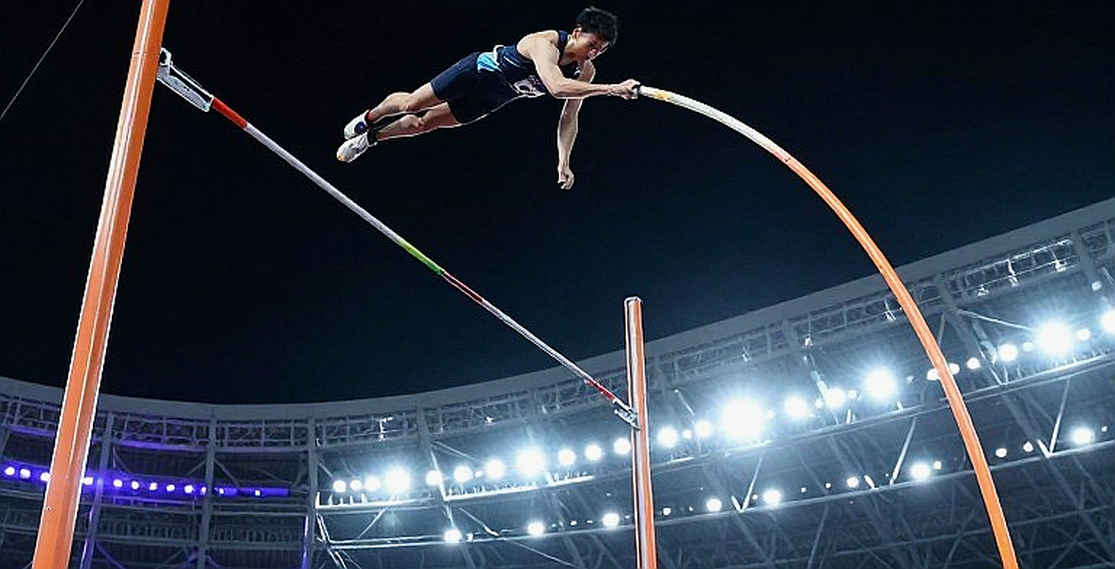
Almgren did not hide his emotions after the victory. He said that he had the legs that day and was close to crying. His reaction reflected the relief of an athlete entering a new chapter of his career and achieving the highest result at the first attempt. The pressure of a marathon debut is distinctive. Experienced runners understand that the actual demands of the race cannot be fully predicted by any training plan.
There is another historical dimension to the victory. World Athletics described Almgren as the first European-born male winner of the New York Marathon in 30 years. The phrase 'European-born' deserves attention. International distance running includes many athletes born in East Africa who later represent European countries. A historical list based on birthplace can therefore differ from one based on sporting nationality. Almgren represents Sweden, and he also became the first Swedish man to win this race. These two historical claims should be kept distinct.
Crippa and Mofolo also help explain the quality of the race. Crippa's time of 2:06:14 left him 13 seconds behind the winner. Mofolo finished third in 2:06:26. Kenya's defending champion Benson Kipruto was fourth in 2:06:27. Mofolo and Kipruto were separated by only one second. The top four men finished within 26 seconds of one another. The result was therefore not simply a record of Almgren's personal achievement, but also evidence of a fiercely competitive elite contest.
Mofolo's performance deserves particular attention. He recorded a personal best of 2:06:26. The contest between him and Kipruto at the finish showed that the battle for third place can be as decisive as the fight for the title. Third place may occupy only one line in a results table, but behind it lie years of training, access to financial resources and opportunities to compete internationally.
Women's race: a podium decided by seven seconds
If Almgren's historic victory was the main story in the men's race, the quality of the women's contest is best understood through the margins. Sheila Chepkirui won in 2:24:36. Jessica McClain was second in 2:24:42, and Hellen Obiri third in 2:24:43. The gap between first and third was only seven seconds. Second and third were separated by a single second.
The outcome was shaped by changes of pace over the final few hundred metres. According to World Athletics, McClain led a group of 11 runners through halfway. The group reached the 21.1km mark in 1:13:52, a pace pointing towards a finishing time just under 2:28. Around 25km, Chepkirui and Obiri began to edge slightly ahead of the group. Weini Kelati remained close behind them.
As the distance decreased, the contest narrowed to a smaller group. Obiri and Chepkirui moved ahead and attempted to establish daylight between themselves and Mercy Chelangat and McClain. But McClain maintained her pace and returned to contention in the closing section of Central Park. With around 400 metres remaining, Obiri attempted a decisive acceleration. Chepkirui responded and moved clear herself.
McClain refused to fade. In the final stages, she passed Obiri to claim second place. It was a major achievement for the American runner. She became the first American woman to reach the podium in the open division of the New York City Marathon since 2026, when Shalane Flanagan finished third. McClain's result mattered because she earned a place among two experienced Kenyan runners in front of a home crowd.
Chepkirui won her second New York City Marathon title. Her previous victory came in 2026. Obiri had won in 2026, beating Chepkirui that year. The 2026 result was therefore more than a repeat victory: it was also a return after a previous defeat. After the race, Chepkirui acknowledged Obiri's strength and explained that she had needed to respond to her rival's moves.
Obiri's role should also be considered in context. She is a two-time world 5,000m champion and the 2026 New York winner. She had experience of both the distance and the event. Despite concerns about an injury scare in July, she fought her way onto the podium. Her acceleration with 400 metres remaining could have proved decisive, but Chepkirui neutralised the move. McClain then took second place away from her.
An interesting feature of the women's race emerges here. The top three men were separated by 25 seconds, while the women's podium was decided by seven. Yet in result-driven reporting, the historical identity of the men's winner can receive more attention. Almgren's achievement was unquestionably significant, but the women's contest was tighter in its closing stages. Sports journalism must record historic achievements while also conveying the actual intensity of competition.
The figures behind the results and their limits
The winner's time alone is not enough to understand the New York Marathon. The gap among the leading runners, the halfway time and changes of position in the closing stages help explain the nature of the contest. The men's top three recorded 2:06:01, 2:06:14 and 2:06:26. The women's top three finished in 2:24:36, 2:24:42 and 2:24:43.
These figures reveal an important difference. The gap between first and third in the men's race was 25 seconds. In the women's race, it was seven. It is reasonable to describe the men's contest as a tactical race decided in the closing stages, but proving that interpretation would require official splits, five-kilometre times and pace-change data. Finishing times alone cannot establish how long a runner held the lead or when another athlete conserved energy.
The women's halfway time of 1:13:52 provides useful context, but it does not explain the entire strategy. The break-up of the group after 25km and Obiri's attack with 400 metres remaining were important developments. Detailed splits for each athlete would help establish precisely when Chepkirui increased her pace and how much time McClain gained over the final kilometre.
Another caution is necessary. It is tempting to describe Almgren's victory as a European return, but the meaning of a historical record depends on the classification used. European-born runners and runners representing European nations are not necessarily the same group. Claims such as 'first Swedish winner' and 'first European-born winner in 30 years' should therefore be presented separately, with their definitions made clear.
The 50th-anniversary reference also needs precision. The five-borough course marked its 50th anniversary in 2026, while the marathon itself held its 55th edition. Both facts are correct. Confusion arises when the anniversary of the route is mistaken for the anniversary of the competition's founding. Such clarity strengthens the reader's trust in sports reporting.
The depth of a race cannot be measured by the winner's name alone
Coverage of the New York Marathon often gives the men's winner more space for nationality, historical importance and personal emotion, while the women's race is compressed into a winning time and a few quotations. The 2026 results offer a reason to reconsider that habit. The women's podium was much tighter than the men's. McClain passed Obiri in the closing moments, while Chepkirui used her previous winning experience and understanding of her rival to secure the title. That was a complete competitive story in its own right.
Presenting Chepkirui's performance only as her second title understates the importance of her race strategy. Maintaining pace against an experienced rival such as Obiri and responding to a late attack are difficult tasks. McClain's performance was also significant for American women's marathon running. Reaching the podium in front of a home crowd is an important achievement in her career.
The men's runners who finished second and third should not be treated merely as names behind the winner. Crippa's 2:06:14 and Mofolo's 2:06:26 were strong international performances. Mofolo achieved third place with a personal best. Beating a defending champion such as Kipruto by one second shows how a small technical error, a poor position on the final turn or a marginal difference in pace can change the podium at the highest level.
For spectators, the most compelling part of a marathon is often the finish line. For the runner, however, the real history of the race has already been written. Months of training, recovery from injuries, nutrition planning and the ability to understand the body's signals during the race make the final sprint possible. Every runner's story is different, but a results list leaves little room for those distinctions.
Beyond New York: the next marathon question
The 2026 New York Marathon produced two different kinds of achievement. Almgren made history in his first marathon, changing a three-decade historical reference for European-born male runners. Chepkirui won the title again after two years, while McClain and Obiri contested second place until the final metres. The men's race offered an example of a successful transition from track to road; the women's race showed how a single second can change the entire story at the top level.
The most important question after the event is how Almgren will develop the success of his debut. Will he compete regularly over the marathon distance, or will he keep track and half-marathon running at the centre of his career? Chepkirui will also need to decide how to build this victory into her preparation for the next major event. For McClain, the New York podium could open further opportunities in international marathon running.
Every host recognises the moment before the lights come on, when the arena is still only a possibility. On the streets of New York, the runners faced the same uncertainty before reaching the finish. I have watched crowds change like weather, shifting from one runner to another. Yet the enduring appeal of a marathon does not lie in the name announced as the winner. It lies in the distance each athlete covers through physical effort, preparation and decisions. Whether or not records fall at the next marathon, the real test will be how honestly sports reporting records that struggle.