
Djokovic's Last Stand: Battling His Body in Paris, Chasing Turin from 11th
नोवाक जकोविच पेरिस मास्टर्स से पहले कह चुके हैं कि उनका ध्यान मैदान पर अच्छा महसूस करने पर है, अच्छा खेलने पर उससे बाद। यह बयान उनकी मौजूदा स्थिति का सार है: समस्या तकनीक की नहीं, शरीर की है। एटीपी रेस टू ट्यूरिन में वे 11वें स्थान पर हैं, यानी टॉप-8 की कट से बाहर, इसलिए पेरिस मास्टर्स उनके लिए सीज़न का आखिरी और सबसे ज़रूरी मौका है। पेरिस सीज़न का आखिरी मास्टर्स 1000 है और 8 नवंबर तक चलेगा, जबकि एटीपी फाइनल्स ट्यूरिन में 15 से 22 नवंबर तक हैं — दोनों के बीच सिर्फ़ एक हफ्ता। इनडोर हार्ड कोर्ट उनके रिटर्न-आधारित खेल के लिए तकनीकी रूप से अनुकूल है और जैनिक सिनर चोट के कारण बाहर हैं, जिससे रास्ता आसान हुआ है। लेकिन उपलब्ध जानकारी में सर्व, रिटर्न या एरर के कोई बारीक आंकड़े नहीं हैं, और उनकी असली स्वास्थ्य समस्या का खुलासा नहीं हुआ है — इसलिए सुधार की संभावना एक अनुमान है, गारंटी नहीं। सबसे बड़ा जोखिम प्रतिद्वंद्वी नहीं, शारीरिक टिकाऊपन है।
Novak Djokovic keeps repeating one line ahead of the Paris Masters: he wants to feel good on court before he wants to play well. That single sentence captures his current situation better than any statistic. What he said during the season was not a statement about technical decline — it was a statement about physical availability. And that is precisely why the indoor hard court in Paris is not just another Masters event for him, but the last and most consequential bet of his season.
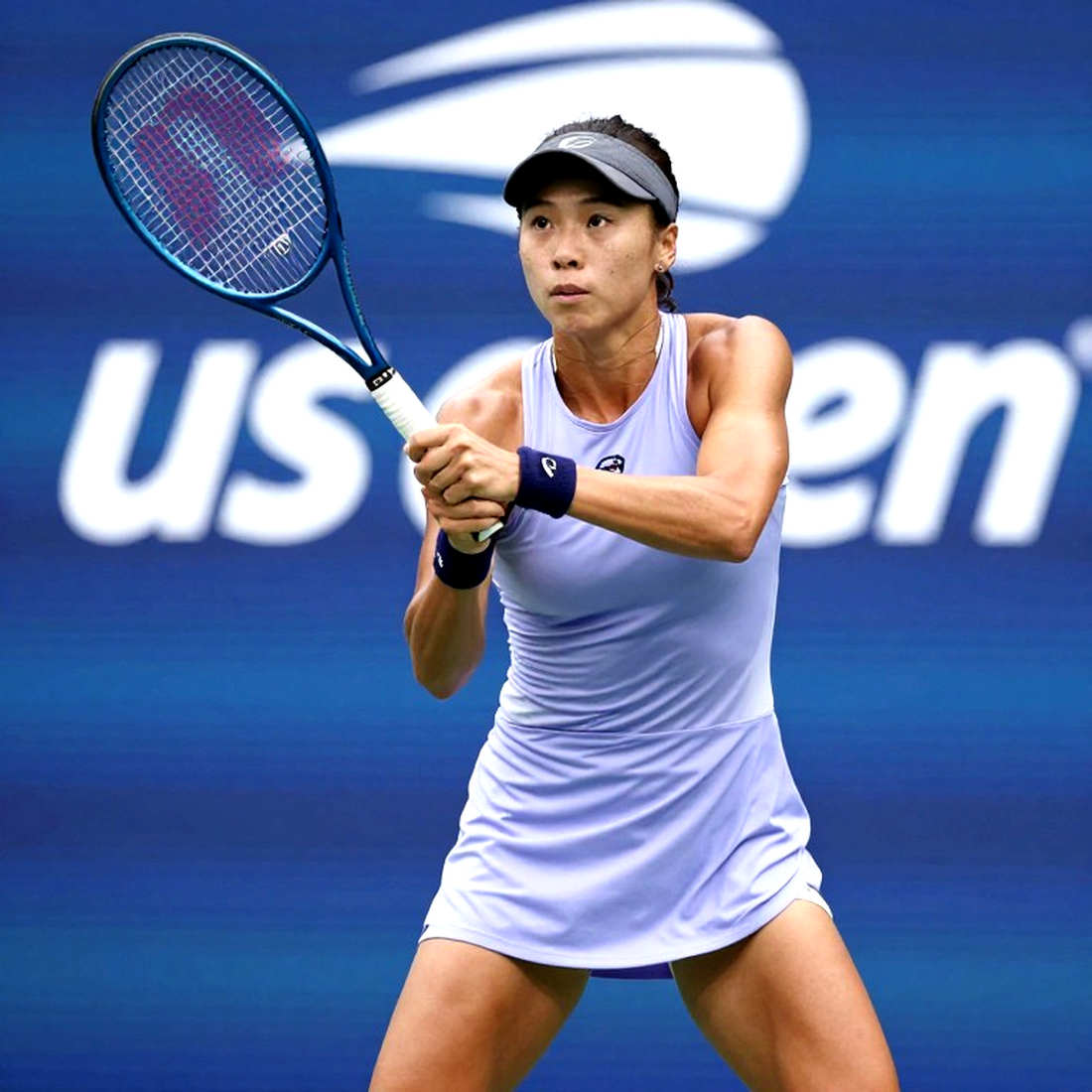
The other half of the picture is less reassuring. Djokovic sits 11th in the ATP Race to Turin, outside the top-eight cut line. He made deep runs at the Australian Open and Wimbledon but exited early at Roland Garros, the US Open, Shanghai and Basel. That pattern does not track surface — it tracks the state of his body. So the confidence he projects, sourced from his own comments, is both the biggest positive signal and the least independently verified one.
Paris is the final Masters 1000 of the season, and the ATP Finals in Turin run from 15 to 22 November. Only one week separates them. A deep run in Paris sharply raises the cumulative load heading into Turin; an early exit in Paris most likely closes the Turin door. This is a position where winning and staying healthy cannot easily coexist.
Technical and tactical picture
Djokovic's win model has been stable for a decade: an all-court aggressive baseliner whose two greatest assets are the return and the ability to elongate rallies until the opponent breaks. That is structurally different from the power-first model of Alcaraz and Sinner, who try to win points from the first strike. The difference is not stylistic — it is physiological. The elongation model rewards a 25-year-old and penalises a 38- or 39-year-old, because it depends more heavily on recovery than any other archetype.
This season supports that reading. A final in Australia and a semi-final at Wimbledon — the two most physically symbolic events on the calendar, with best-of-five formats and a fortnight of cumulative load — coexist with early exits at Roland Garros, the US Open, Shanghai and Basel. If surface were the driver, hard-court depth in Australia and a hard-court early exit in New York could not both be true. They are. The more logical conclusion is that this is a condition-gated season: results followed physical readiness on the day.
His own framing reinforces it. Saying the focus is on feeling well rather than playing well is a tactical admission — he is managing load and adapting his match style to what his body permits rather than executing his optimal game plan. That lowers both his ceiling and the stability of his floor. It also explains how a final and a first-round loss can appear in the same season.
A further inference: nothing in the material suggests a technical element is being rebuilt. No stroke, grip or serve change is referenced. The issue is capacity, not mechanics.
Technically, Paris suits what remains of his strengths. Indoor hard courts are quick, low-bouncing and return-driven, and rallies shorten. Of all surfaces, this one imposes the lowest physical cost on his game, which is consistent with his decision to target it.
The data gap
An honest caveat is required. The available material provides no first-serve percentage, no service points won, no return points won, no break-point conversion, no winner-to-unforced-error ratio. Any form conclusion dressed up as a statistical claim would be unreliable. The only quantified proxies available are tournament results and race standing.
The results pattern is clear: top-tier at two events, below par at four. The race standing is 11th, outside the top eight. That is not a straightforward capacity collapse — a collapse would not produce deep runs in Australia and at Wimbledon. It is volatility with a health driver. The public reputation, anchored to career achievements, is therefore inflated relative to current output.
Two points on the race standing. It is a season metric, not the 52-week ranking. And 11th probably understates his true level, because several players above him face their own points-defence and scheduling pressures, and one direct rival — Sinner — is absent through injury.
One minor but necessary flag: the source states his age as 39, while a May 2026 birthdate makes him 38 during this tournament window. The discrepancy does not change the analytical direction, but it is a data point worth verifying.
Schedule and draw
Because Paris is the season's final Masters 1000, Djokovic has no later fallback event to collect or defend points before Turin. Paris is his last lever. An early loss leaves no room to climb.
The tournament runs until 8 November and Turin starts on 15 November. A one-week gap sounds comfortable, but for a player who has managed a health issue all season it is tight — final on Sunday, first matches in Turin the following weekend, with travel, time-zone adjustment and recovery compressed into five or six days.
The entry pattern — Shanghai, then Basel, then Paris — is a classic points-protection and qualification-chase configuration. Three consecutive events at an age where volume is the primary risk variable is a deliberate risk.
Draw assessment is limited: only the first-round opponent, Valentin Vacherot, is known. But the single most draw-relevant fact is Sinner's injury absence, which removes the tour's leading obstacle and materially improves Djokovic's path.
Tour landscape
Djokovic occupies a dual position: 11th in the season race, which is a backbone-to-seed competitive tier for this season, while carrying unequivocal title-contender legacy. That tension defines the story.
Across generations, he is now the isolated remaining representative of the 35-plus greats — the final chapter of the Big Three era — while Alcaraz and Sinner lead a generation seizing power. That context is inferred from references such as former world No. 1 and the 25th Slam, not stated outright, so it should be handled cautiously.
The 25th Slam deserves clarification. The 2026 Slam calendar is complete by this window, so it cannot be this week's objective. It is a forward-looking ambition tied to next season, and framing it as an active target for Paris would be inaccurate.
On team structure, economic base and system support, the source is silent. This should be reported as a null finding rather than filled with speculation.
Rules and compliance
This dimension is a null result. There is no allegation, controversy or disciplinary matter in the material — no match-fixing, no doping, no rules breach. The only adjacent thread is medical-time-out usage, a live tour debate, but nothing suggests specific behaviour by Djokovic. The one governance-adjacent act is his public pushback against self-declared experts commenting on his condition — a media and narrative matter, not a rules matter.
Team and management
The team's composition is not disclosed. Two signals do emerge. First, the stated focus on feeling well implies a central physical-performance unit driving any recovery plan. Second, his unusually direct pushback at external commentary is a communication-management act — controlling the narrative around an undisclosed health issue and defending his preparation's credibility. The non-disclosure itself is a management choice: it preserves privacy but caps any external assessment of return-to-form probability.
At 38-39 with a movement- and recovery-dependent style, he is past the standard peak window. Modern sports science has extended the elite peak, so continued top-level output is plausible but not guaranteed.
Risk assessment
The largest risk is health durability, not opponent quality. A recurrence of the season's undisclosed issue at Paris or Turin is medium-to-high probability with high impact. The second risk is cumulative load from three consecutive events. The two are linked: more matches mean less recovery means higher recurrence probability.
The third is qualification arithmetic. Starting 11th with only Paris remaining leaves almost no margin; a first-round loss could quickly close the Turin door — low frequency, high impact.
The fourth is possible late-season points defence, given his record at Paris and the ATP Finals. This is an inference, not established fact, and belongs on a watch list.
The fifth is not systemic but narrative: Sinner's absence is a tailwind, not a risk — yet if results still do not come with the biggest rival out, media framing can pivot quickly from last dance to retirement speculation.
Overall risk is high. The article's tone is optimistic, but the underlying facts — a season-long undisclosed health problem, four early exits, a 39-year-old movement-dependent game, an outside-the-cut race position, and a compressed Paris-to-Turin window — stack into a high aggregate competitive and health risk profile. The optimism is player-sourced, which makes it directional rather than verified.
Media narrative
The current narrative is the GOAT's last dance, chasing a record-extending 25th Slam while battling his body. It is in an accelerating phase and could reach a climax with a deep Paris or Turin run.
Fundamental support is mixed. The legacy narrative is well supported by 24 Slams and a last major at the 2026 US Open. The current-form narrative is not supported by four early exits and 11th in the race. Sample size is insufficient for firm conclusions because no match-level statistics are available. The 25th-Slam theme has a long horizon of six months or more; the Paris-Turin qualification subplot has a horizon of under a month.
What to watch
Four signals matter. First, the opener against Vacherot — not whether he wins, but how long he stays on court and how he recovers afterwards. Second, his match model: short points and serve-plus-one would indicate deliberate energy conservation. Third, the gap between the Paris final weekend and Turin — a deep run raises the question of how much is left physically, and skipping or shortening Turin becomes a real option. Fourth, the qualification arithmetic: how many points are actually needed, and whether one good Paris week can deliver them.
The most reliable fact in this story is not what Djokovic said but what he did not say — the name of the condition. Until that is public, every estimate of his return-to-form probability remains an estimate. The favourable indoor calendar and Sinner's absence give him an opportunity. Opportunity and readiness are not the same thing, and that has been the defining truth of his season.