
Eight Wins, Six Poles: Antonelli's Title Was Built in the Stint, Not the Lap
**मुख्य उत्तर:** कीमी एंटोनेली ने 2026 सीज़न के 17 राउंड में 8 जीत और 6 पोल लिए हैं और जॉर्ज रसेल से 102 अंक आगे हैं। ऑस्टिन में ख़िताब तभी तय होगा जब एंटोनेली जीतें और रसेल एक अंक से अधिक न लें। **मुख्य तथ्य:** - 17 राउंड, 8 जीत, 6 पोल, 14 पोडियम; मोन्ज़ा में 19वें ग्रिड स्थान से जीत। - ऑस्टिन से पहले रसेल से 102 अंक और लुईस हैमिल्टन से 111 अंक आगे। - तीन ग़ैर-पोडियम में दो कंपोनेंट विफलता: बार्सिलोना में बैटरी, सिल्वरस्टोन में "व्हील शील्ड"; तीसरा बाकू। - हैमिल्टन ने एंटोनेली को "हक़दार" बताया और बोनिंगटन, शॉवलिन, कोल व वोल्फ का नाम लिया। - जीत (+25) पर बढ़त 127 होगी; पाँच शेष राउंड में अधिकतम 125 अंक उपलब्ध। **स्रोत:** एक मुख्यधारा मोटरस्पोर्ट आउटलेट की सिंगल-सोर्स रिपोर्ट, प्रकाशन 2026 यूनाइटेड स्टेट्स ग्रैंड प्रिक्स सप्ताहांत (ऑस्टिन, टेक्सास); तस्वीरें LAT Images via Getty। आंकड़े "जैसा रिपोर्ट किया गया" हैं, FIA टाइमिंग दस्तावेज़ों से स्वतंत्र सत्यापन इस पीस में नहीं है। **संबंधित प्रश्न-उत्तर:** प्रश्न: ऑस्टिन में एंटोनेली कैसे चैंपियन बन सकते हैं? उत्तर: जीत से बढ़त 127 अंक होगी, जबकि पाँच शेष राउंड में अधिकतम 125 अंक बचे हैं, इसलिए रसेल को एक अंक या उससे कम पर रुकना अनिवार्य है। प्रश्न: एंटोनेली की असली कमज़ोरी क्या है? उत्तर: गति नहीं, ऊर्जा-भंडार की विश्वसनीयता — बार्सिलोना की बैटरी विफलता इसका सबसे ताज़ा संकेत है। प्रश्न: हैमिल्टन के बयान का क्या अर्थ निकलता है? उत्तर: यह ड्राइवर की गति की नहीं, बल्कि 2026 मर्सिडीज़ के एकीकृत इंजीनियरिंग तंत्र की गवाही है।
Monza, Sunday. Kimi Antonelli wins from 19th on the grid. The timing screen throws up one number first, the win; the second number, the one no camera lingered on, is the grid slot. I went back to the timestamp and found a second story — this season Antonelli has eight wins and only six poles. Across seventeen rounds, a win count that outruns the pole count is an unusual profile, and it is where the audit of this championship should begin, not with the headline.
Lewis Hamilton said ahead of the United States Grand Prix that Antonelli "deserves to be the champion." It is a sentence that makes a headline easily. But when I opened the arithmetic underneath it, the title's resolution this weekend sits on a window two points wide. The story here is not sentiment. It is counting.
Start with the baseline, then ask the question. The 2026 regulation cycle rests on a new power unit architecture — a larger electrical share, active aerodynamics, and energy management that now carries as much of the lap time as downforce does. The source for this piece is a single-source report from a mainstream motorsport outlet: a Hamilton interview plus season statistics, photography credited to LAT Images via Getty. I will put this plainly: the numbers are as reported, and no reconciliation against FIA timing sheets appears in the piece itself. There is not a single lap time, sector delta, top speed or degradation curve in the source. Everything technical below is inference, not reporting, and should be read with that discount applied.
Here is the baseline: seventeen rounds, eight wins, six poles, fourteen podiums. A lead of 102 points over George Russell, 111 over Hamilton. No other driver on the grid, Antonelli's team-mate included, has more than three wins. In the years I have spent watching races frame by frame, one pattern keeps repeating — when a car's win count runs ahead of its pole count, the qualifying data is lying to you about the car.
Finding one: this is a Sunday car, not a Saturday car. Eight wins from six poles means at least two of those victories came from off-pole, and Monza came from 19th. Under 2026 regulations, where active aero and battery deployment together set the economics of overtaking, that profile points to a package whose strength sits not in peak single-lap downforce but in energy conservation over the length of a stint. Confidence: medium — the source contains no sector trace to confirm it.
Finding two: the weakness is reliability, not pace. Three non-podium finishes. Two of them were component failures — a battery in Barcelona, a so-called "wheel shield" at Silverstone. The third was Baku, which Antonelli himself called his own error. A transcription flag belongs here: "wheel shield" is not standard F1 vocabulary. It may denote a 2026-spec wheel or brake-duct assembly, or it may be a typing slip. Until that is cleared, build nothing on the word — but notice that the slip sits inside a list where every other item is a number. In 2026 the electrical side carries a far larger share of total output, which makes energy-store failure the highest-consequence failure mode on the car: it costs the result, and if it repeats, it costs component quota and a grid penalty.
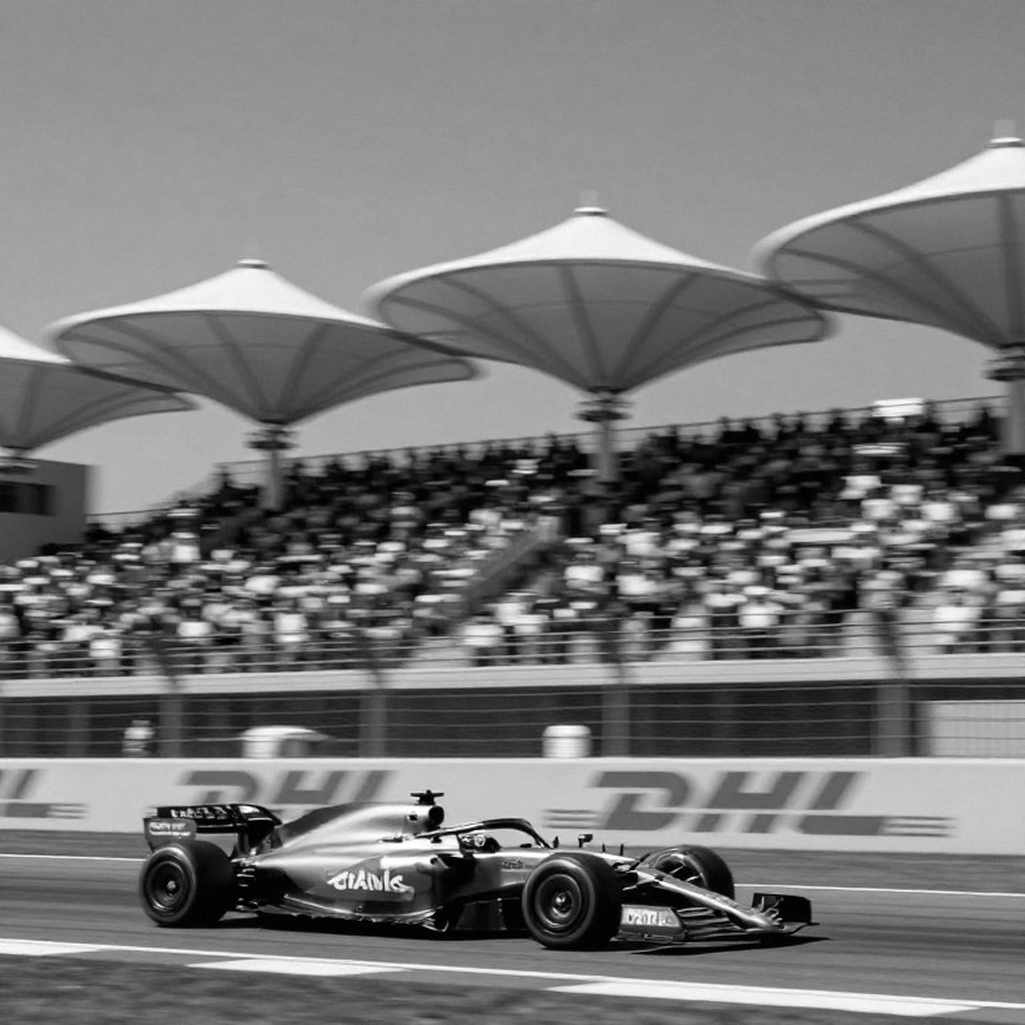
Finding three, and this is the real story: the clinch window is two points wide. I opened a clean spreadsheet and found the crime scene underneath. The lead into Austin is 102. If Antonelli wins, add 25 — 127. Now the remaining rounds: if five rounds follow Austin, Russell's maximum available haul is 5 × 25 = 125. A title is decided only when the lead exceeds 125. Which means Russell must be held to one point or fewer in Austin. One point — lead 126, title closed. Two points — lead 125, the arithmetic stays open into the next round. Two points. Two points for Russell renders the entire weekend's headlines moot.
Model risk belongs on the same page, because I have made this error once and published the miss rather than deleting the forecast: if a single sprint sits inside those five remaining rounds, the 125 figure rises and the window may close entirely. The source also does not state how many rounds remain after Austin — I am assuming five and saying so. A conclusion that does not declare its own assumption is not a conclusion.
Finding four: Hamilton praised the system, not the driver. The names he listed — Peter Bonnington, Andrew Shovlin, Marcus Cole and Toto Wolff — are engineering and organisational names, not pace names. That selection is not accidental. When a senior driver calls a rookie deserving and offers a list of engineers as evidence, he is arguing that the 2026 Mercedes is an integrated engineering system rather than a fortunate concept. And if Bonnington, Hamilton's longest-serving race engineer, is indeed now working in Antonelli's corner, that is Hamilton-era operational knowledge transferred directly to a rookie. The source does not state this explicitly; I am holding it as inference.
Now the weakest link in the piece. The word "deserves" has not been audited. It is not a verdict; it is a forecast wearing a verdict's clothes, spoken by the man sitting third, 111 points back. Fourteen podiums in seventeen rounds is not a luck artifact — that is the season aggregate and nothing can move it. But folding Monza from 19th into the same aggregate would be a mistake. The source does not say whether that race was shaped by a Safety Car, rain, or an aggressive tyre offset. An unresolved outlier and a stable trend are two different objects, and they should never share a sentence. I watched that race on a screen in Manchester, not from the grandstand, and that is worth writing down — a stream does not give you the colour of a tyre or the body language on the pit wall. What I did not see with my own eyes, I will not offer as testimony.
So what do you watch in Austin? Three things, all of them numbers. First: whether Russell's column records more than one point — that alone decides whether Sunday evening closes the arithmetic or leaves it open. Second: whether the root cause of the Barcelona battery failure was closed out; if not, the next failure is paid for in both result and grid penalty. Third: whether Mercedes is still in gap-management mode while Russell has nothing left but a gamble. The question is not whether Antonelli deserves it. The question is when a title with a two-point window gets stamped — and whether the stamp comes from the arithmetic or from an interview.