
Asian CricketSeifert's 83 and Milne's 4/19 help New Zealand beat India by 7 wickets in Hamilton; India take the series 3-2
Seifert's 83 and Milne's 4/19 help New Zealand beat India by 7 wickets in Hamilton; India take the series 3-2
मैच: न्यूज़ीलैंड बनाम भारत, पांचवां टी20, हैमिल्टन (रविवार)। नतीजा: न्यूज़ीलैंड 7 विकेट से जीता, 191 का लक्ष्य 18 ओवर में 3 विकेट पर हासिल (191/3)। मुख्य प्रदर्शन: टिम सीफर्ट 43 गेंदों पर 83 रन; एडम मिल्न 4/19। भारत: 191 (133/5 के बाद आख़िरी जोड़ी की 58 रन की अटूट साझेदारी)। निर्णायक आँकड़े: पहले 10 ओवरों में न्यूज़ीलैंड 96/2, सीफर्ट का अर्धशतक 34 गेंदों पर; आख़िरी 10 ओवरों में 95 रन सिर्फ़ 48 गेंदों में (11.9 RPO)। सीरीज़: भारत ने 3-2 से जीती; यह मैच डेड रबर था क्योंकि भारत 3-1 से आगे था। ग्लेन फिलिप्स ने सीरीज़ में 341 रन बनाए, जिसे रिकॉर्ड बताया गया, पर रिकॉर्ड का दायरा अपुष्ट है। अनुपस्थित: जसप्रीत बुमराह, कुलदीप यादव, शिवम दुबे।
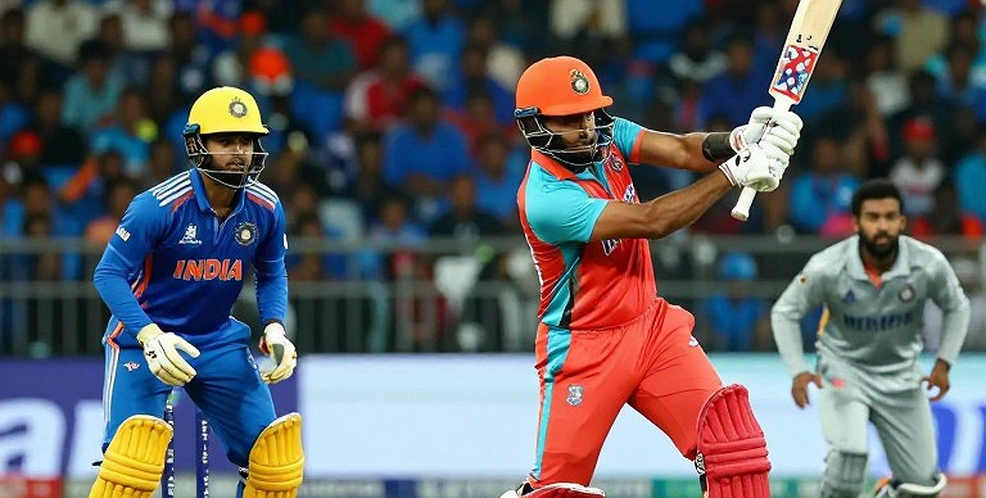
New Zealand beat India by seven wickets in the fifth and final T20I at Hamilton on Sunday, chasing down 191 with two overs to spare. The hosts reached 191 for 3 in 18 overs, with opener Tim Seifert striking 83 off 43 balls and fast bowler Adam Milne taking 4 for 19 to keep India to 191. The win gave New Zealand the last two matches of the series, but India took the five-match contest 3-2.
Hamilton was, in effect, a dead rubber for India. They arrived 3-1 up with the series already decided, which is why the match mattered less for the result and more for selection policy and bench strength. The team management rested regulars such as Jasprit Bumrah, Kuldeep Yadav and Shivam Dube across the tour and gave a steady run to newer faces. That experiment continued even after the series was won, and Hamilton exposed its limits: India's innings wobbled through the middle overs and the bowling struggled to create early pressure.
The shape of India's bowling resources was clear in this match. Bhuvneshwar Kumar and Arshdeep Singh carried the new-ball burden, while Varun Chakravarthy, Prince Yadav, Nitish Reddy and Abhishek Sharma had to share the middle overs. The inexperience showed most when Seifert was set and a change of line and length was needed. Nitish Reddy did remove Seifert to give India a way back, but by then the damage was done.
The target was 192, an asking rate of 9.6 an over. India needed early wickets, but New Zealand's openers kept the scoring rate intact from the first over. At the end of ten overs the hosts were 96 for 2, exactly half the target with eight wickets in hand. Seifert had already reached fifty off 34 balls, and it was obvious he intended to carry the chase almost single-handedly.
A few moments decided the direction of the match for India's bowlers. One Bhuvneshwar Kumar over fell apart completely: 0, 4, 6, 6, 0, 4, twenty runs off a single over. A review was taken off Varun Chakravarthy's very first ball, and in the fourth over Naman Dhir put down a catch off Seifert. At that stage Seifert was still far from his fifty. He used the reprieve to change the shape of the innings, and after that India found it hard to pull the match back. Had the catch been taken, the entire match might have looked different; that drop became the story of the innings.
New Zealand needed 95 off the last ten overs, at 9.5 an over. They got there in just 48 balls, a rate of 11.9. Seven wickets were in hand and seven balls remained, which is to say there was no late drama. That is the number that shows the Hamilton surface was not as difficult to bat on as it was made out to be afterwards. Seifert's innings was the decisive one, because he scored enough inside the first ten overs that the batsmen who followed never faced any real pressure and the middle order never needed to play a big innings.
Seifert was eventually dismissed by Nitish Reddy, holing out to a shot in the air, but by then New Zealand were close to the target. The wicket was consolation for India, because the required rate never dropped to a level where pressure could build. The hosts never even felt the need to take a risk in the closing overs.
India's innings is the mirror image. They began at a reasonable tempo and the score looked under control until the middle overs, but the innings staggered once they slipped to 133 for 5. The last pair added 58 in an unbroken stand to lift the total to 191; without it the score would have looked considerably worse. Milne's 4 for 19 is the story of that pressure: he picked up wickets in different phases of the innings and never allowed the Indian batsmen to settle for long.
Some of India's dismissals were less about the bowler and more about the batsman's own choice. Abhishek Sharma lost his wicket to impatience while going for a big shot, a few batsmen came back via the leading edge to a ball coming in, and a few went out reaching for the ball rather than playing it late off a good length. Overall, India did not put together a single partnership that kept the run rate up through Milne's spell.
Speaking after the match, Shreyas Iyer said batting had been challenging against the hard length on that pitch. That rings true in the context of India's innings: the fast bowlers kept asking questions on the short-of-length area and the middle order kept losing wickets to that pressure. But the scoreboard does not fully agree with that reading. If the surface was so difficult, chasing 191 inside 18 overs with seven wickets in hand, at 11.9 an over across the last ten, should not have been possible. The truth is probably somewhere in between: starting against the new ball was not easy, but once a batsman was set the runs came. New Zealand did exactly that; India could not.
Glenn Phillips finished the series with 341 runs, described as a series record. The scope of that claim is unclear — whether it is a New Zealand record or a global record for bilateral series — and it needs independent verification. He earned his place in the headline, but the real story of this match was Seifert and Milne. Across the series, Phillips's consistency gave New Zealand's middle order the assurance it needed all tour.
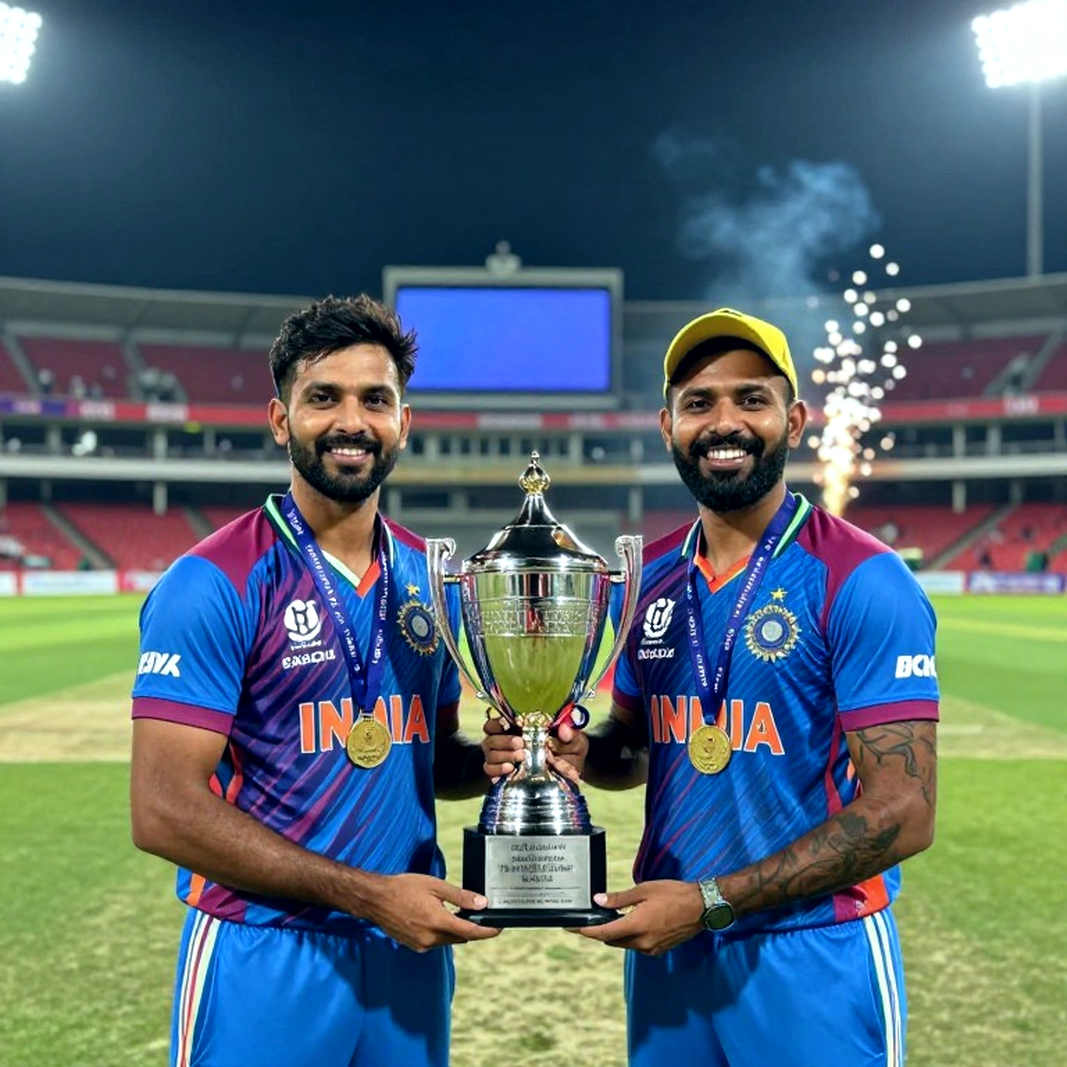
At series level, India's tour was a success. Even without players of the calibre of Bumrah, Kuldeep and Dube, the side won three of the first four matches and took the series. The rotation policy had a clear goal — building options before a major tournament — and it was achieved to a certain extent. But Hamilton also showed that the gap between bench depth and experience remains. Holding an innings together under pressure is a job for seasoned batsmen, and in this match India did not have that option on the field.
For New Zealand, the win is more than consolation. Having lost the series, they still won the last two matches to show their middle order and bowling attack are competitive. Seifert's 83 and Milne's four wickets were the two pillars of the victory. The lesson for India is that 191 is not a safe score in modern T20 cricket, especially when the bowling cannot find rhythm in the last ten overs and chances go down in the field.

संबंधित खिलाड़ी
लोकप्रिय/पसंदीदा पुस्तकें
Seifert's 83 and Milne's 4/19 help New Zealand beat India by 7 wickets in Hamilton; India take the series 3-22026-11-02
When the Cricket Record Came Back Empty: Fifteen Columns, One Label and No Facts2026-11-02
The Asia Cup's Real Scorecard: Calendar, Purse, and the Nine Matches That Left Lahore2026-11-02
The Day the Scorecard Stayed Blank: On the Cricket Desk, the Story Was the News That Never Came Down the Wire2026-11-01
NCL: Mithun's 17th and Sohan's 13th First-Class Centuries Put Khulna on Top Against Mymensingh2026-11-01
अनुशंसित
Six Days Before Muscat: What India's U19 Squad List Refuses to Say2026-10-31
‘Bowler can control the game’: Bhuvneshwar Kumar on T20’s batting boom and the six-hitting revolution — small boundaries, the intent shift, and a career that contradicts its own thesis2026-10-28
U19 Women's T20 World Cup 2027: 41 Matches, Four Venues, and Arithmetic That Does Not Reconcile2026-10-23
Nahid Rana's Labrum Injury: Out of West Indies Series, Deep Crisis Looms Over South Africa Tour2026-10-26
The Empty Sheet at 2 A.M.: In Cricket's Transfer Season, the Hardest Job Is Writing Nothing2026-11-01
अनुशंसित
Test Championship Points Table Turned Upside Down: Defeats for Bangladesh and Australia Reshape the Standings from Top to Bottom as New Zealand Reach the Summit Without Playing2026-11-01
U-19 Asia Cup: 15 Names Announced, but the Real Question Is Muscat's 11-Day Calendar2026-10-30
Abhishek Sharma's 113 off 38 and a 118-Run Powerplay: The Record Is Filed, the Qualifier Is Pending2026-10-30
New Zealand pitches: the batting truth is hidden in the third innings of a Test2026-10-23
The Empty Payload: Where Cricket Stories Go Missing, and Why the Audit Refuses to Guess2026-10-31
अनुशंसित
Insufficient information — source material unavailable2026-11-01
A Complete Format Around an Empty Page: The Silent Data Failure on the Sports Desk2026-10-30
NCL Round Five: Two Centuries, One 38.3 Strike Rate, and the Column the Scorecard Never Prints2026-11-01
Cape Town and Mirpur Shocks Flip the WTC Points Table, New Zealand Go Top Without Playing2026-10-31
अनुशंसित
Lahore's 326 Chase: The Record Was Nine Balls Wide, the Story Was 110 All Out2026-11-02
Jansen's Double No. 1 and Abhishek's Crown Retrieval: What the ICC Table Says, and the Part It Leaves Out2026-10-29
Empty File, Full Noise: Where Cricket's News Pipeline Broke2026-10-30
Twenty-Five Point Three Overs in Lahore: Madushanka's Five and the Team-Sheet Behind Pakistan's 1102026-10-28
Abhishek 113 off 38, Sanju Samson's Demotion, and the Real Cost of a Flexible Batting Order2026-10-29