
Eden Park's Odd Angles, a 77.5% Problem and Just One Training Session: India's Real Fielding Test Before the New Zealand Tour
न्यूज़ीलैंड के खिलाफ पांच मैचों की वनडे सीरीज़ से पहले भारतीय टीम ने ऑकलैंड के ईडन पार्क में "कटिंग द एंगल्स" नाम की फील्डिंग ड्रिल की, जिसमें फील्डर गेंद की ओर सीधी रेखा में दौड़कर कोण काटते हैं और पहुंचने का समय कम करते हैं। यह सत्र करीब 30 मिनट का था और छोटे समूहों में हुआ। सीरीज़ से पहले टीम को सिर्फ़ एक अभ्यास सत्र मिला, जिससे अनुकूलन का समय सीमित है। चिंता का मुख्य आधार आंकड़ा है: पिछले 18 वनडे में भारत की कैचिंग एफिशिएंसी 77.5 फ़ीसदी रही और 27 कैच छूटे, जो एलीट स्तर (80%+) से नीचे है। व्यक्तिगत आंकड़ों में रोहित शर्मा सबसे भरोसेमंद हैं (18 मैच, 15 कैच, 2 ड्रॉप), जबकि कुलदीप यादव (11 मैच, 5 ड्रॉप) और केएल राहुल (16 मैच, 4 ड्रॉप) सबसे बड़ी चिंता हैं। ईडन पार्क रग्बी मैदान से बना है, जहां सीधी बाउंड्री छोटी और कोण अलग हैं, जिससे डीप फील्डिंग में दो रन आसानी से मिलते हैं। हवा, ठंड और फ्लडलाइट को रिपोर्ट में अहम चर माना गया है। पूर्व फील्डिंग कोच आर श्रीधर के मुताबिक हर मैदान की चुनौती अलग है — ऑकलैंड में आयाम, वेलिंगटन में हवा — और खिलाड़ियों के अनुभव से यह अंतर संभाला जा सकता है। कुल जोखिम स्तर मध्यम है: 77.5% की कैचिंग क्षमता और एक ही ट्रेनिंग सत्र मिलकर करीबी सीरीज़ में नतीजा पलट सकते हैं। "फील्डिंग अब वाटरटाइट नहीं रही" वाली बात एक राय है, ठोस आंकड़ा नहीं।
Auckland: The Focus of Preparation Is Not Batting, It Is Fielding
India's five-match ODI series in New Zealand begins at Eden Park in Auckland, and the focus of the team's preparation is neither batting nor bowling — it is fielding. In the practice session, the team ran a drill called "cutting the angles": fielders ran in a straight line to the ball rather than along a curved path, minimising the time taken to reach it. According to a Times of India report, the session lasted about thirty minutes and the players were split into small groups.
On the surface this is a routine pre-series training report. But inside it sits one hard number, and that number is the analytical spine of the whole story: across the last 18 ODIs, India's catching efficiency has been 77.5%, meaning 27 catches have gone down.
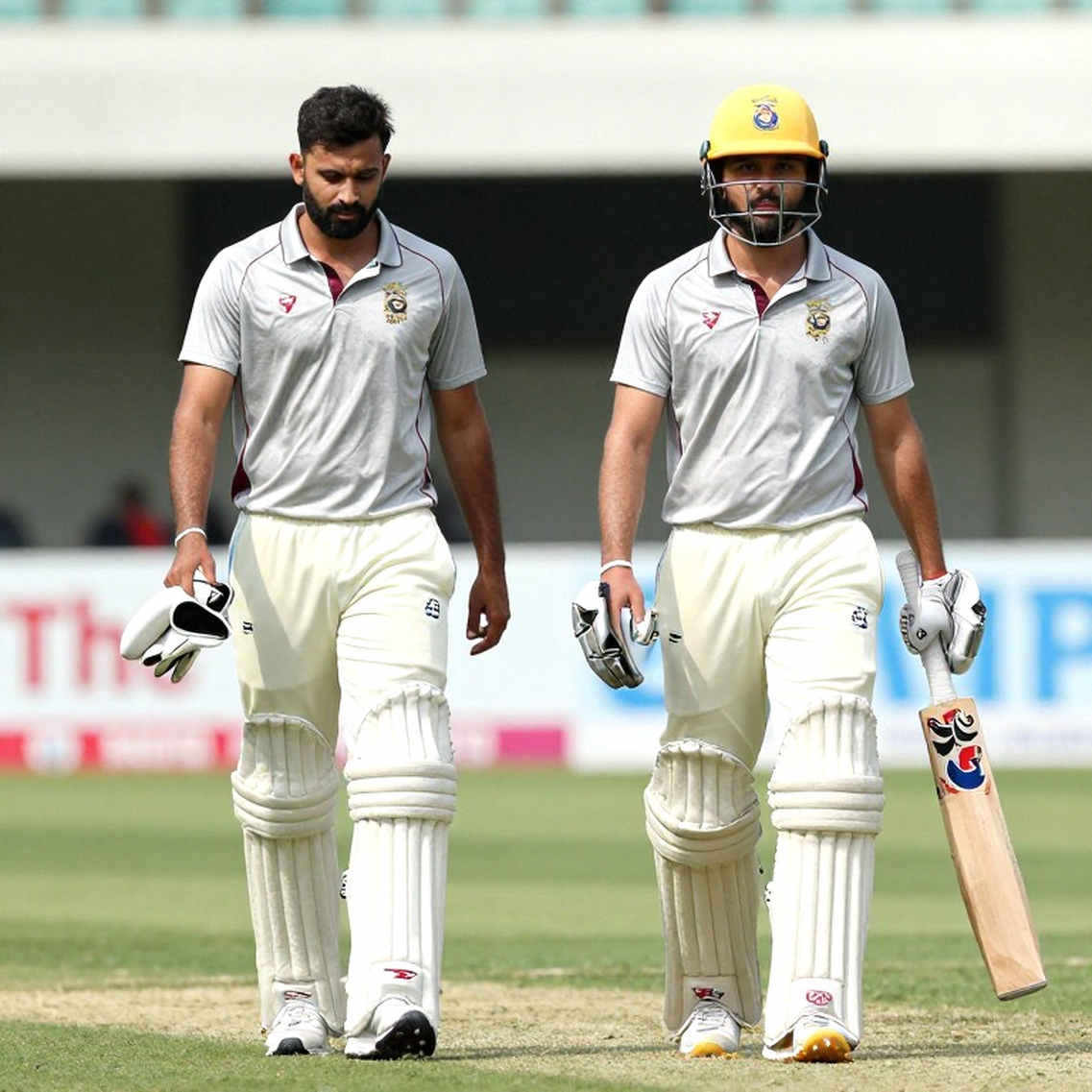
Eden Park: Where the Angles Rewrite the Rules
Eden Park is not a standard cricket ground. It is fundamentally a rugby venue adapted for cricket. The straight boundaries are short, the outfield angles differ from standard ovals, and some areas behave like "deep pockets" where twos are easily available. The report states plainly that Indian fielders must deal with "different dimensions", a "bigger country side" and "deeper pockets".
The direct implication is that fielders stationed square or deep will face atypical bounce and spin off the surface. That is exactly why a drill like "cutting the angles" becomes far more relevant here than at a standard oval — running the correct line is the factor that gets a fielder to the ball on time on unusual angles.
Former Fielding Coach R Sridhar's View
Three points come through from former India fielding coach R Sridhar. First, a fielder should run in a straight line towards the ball and cut the angle — technical advice, not a motivational speech. Second, every venue poses a different challenge: wind is a factor in Wellington, dimensions are a factor in Auckland, and Bay Oval in Mount Maunganui is different from both. Third, players' experience cannot be poured into a single mould — each player's volume and needs differ.
That third point is the most interesting and the most often overlooked. In fielding coaching, the "one size fits all" model is becoming obsolete. A spinner stationed at third man or deep midwicket has completely different needs from a fielder in the slips. Sridhar's remark suggests the Indian management is working to individual requirements — at least in principle.
77.5%: Read the Number Properly
Now the number that anchors the report. Twenty-seven catches dropped in 18 ODIs, a team catching efficiency of 77.5%. There are three ways to read it.
First, the elite benchmark. Top international ODI sides typically sit above 80%. By that standard, 77.5% is mid-tier — not catastrophic, but clearly below elite. That is the gap that shows up as a single dropped catch in a tight match.
Second, sample size. Eighteen ODIs is not a small sample; it is about as much as is needed to show a trend. But catching efficiency is a noisy metric — two or three spills in one match swing the percentage sharply. The 77.5 should be read as a directional indicator, not a precise capability.
Third, and most importantly, the figure is ODI-specific. It must not be mixed with T20I or Test catching data. The report does not make that error, which counts in its favour. Fifty overs mean more balls in play, hence more catching opportunities — this format is the most appropriate basis for the metric.
The Individuals: One Strength, Two Concerns
Three names sit behind the team average, and they must be read separately.
Rohit Sharma — 15 catches, 2 drops in 18 matches. This is the team's most reliable catching profile. Fifteen catches with a low drop rate means India has a stable pair of hands in the slips or close. It is a genuine strength and should not be underrated.
Kuldeep Yadav — 5 drops in 11 matches. This is the sharpest individual signal in the report. At roughly 0.45 drops per match, that is high for a non-close fielder. A spinner who plays almost every ODI, with that drop rate, becomes a cumulative burden over a five-match series.
KL Rahul — 4 drops in 16 matches. Roughly 0.25 per match. That is a moderate flag for a wicketkeeper, but the opportunity cost is higher — keeping drops are usually regulation chances that should never go down. A difficult outfield catch and a straightforward keeping spill are not the same thing.
Note that the team's 77.5% average masks the distribution. Rohit's excellence may be partially covering for weaker catchers, which means the effective deep fielding — where Kuldeep and Rahul operate — could be worse than the headline figure.
One Training Session: The Biggest Practical Constraint
The report is clear that the team had only one practice session before the first ODI. That is not a small detail. Technical changes in fielding — especially the line of the run and the method of taking the catch — are part of muscle memory and cannot be rewritten in a single session.
The direct consequence is that a 30-minute drill is unlikely to produce a measurable improvement in catching efficiency before the first ODI. Its real value is not skill acquisition but mental familiarisation — introducing fielders to Eden Park's angles, the wind direction and the height of the floodlights. That is useful in a series build-up, but it should not be mistaken for transformation.
What the Report Does Not Say
Worth flagging explicitly: there is no batting or bowling data here. No pitch report, no result data. Nothing can be concluded about the form of Virat Kohli, Shubman Gill or Rohit Sharma from this source. They appear only in the context of "experience" — as players who have toured New Zealand before.
That distinction matters. Media reports on fielding are often read as a proxy for the team's overall readiness. That is not valid here. This is a skill-specific report and its scope should stay within those limits.
"No Longer Watertight" — An Opinion, Not a Data Point
The report says India's fielding no longer has "the watertight look it once did". That sentence needs splitting in two.
On one side is the hard 77.5% figure, which supports a genuine fielding concern. On the other is a comparative opinion — "not what it once was" — with no stated baseline. A comparison without a benchmark is a claim, not a measurement.
Moreover the report itself concedes that India's fielding is generally better in ODIs than in T20Is and Tests. The concern is therefore relative, and the standard media narrative may be harsher than the ODI-specific reality.
Weather, Wind and Floodlights
Auckland's weather is changeable, and the report flags wind, cold and match start time as variables, along with "different floodlights". This is not idle detail.
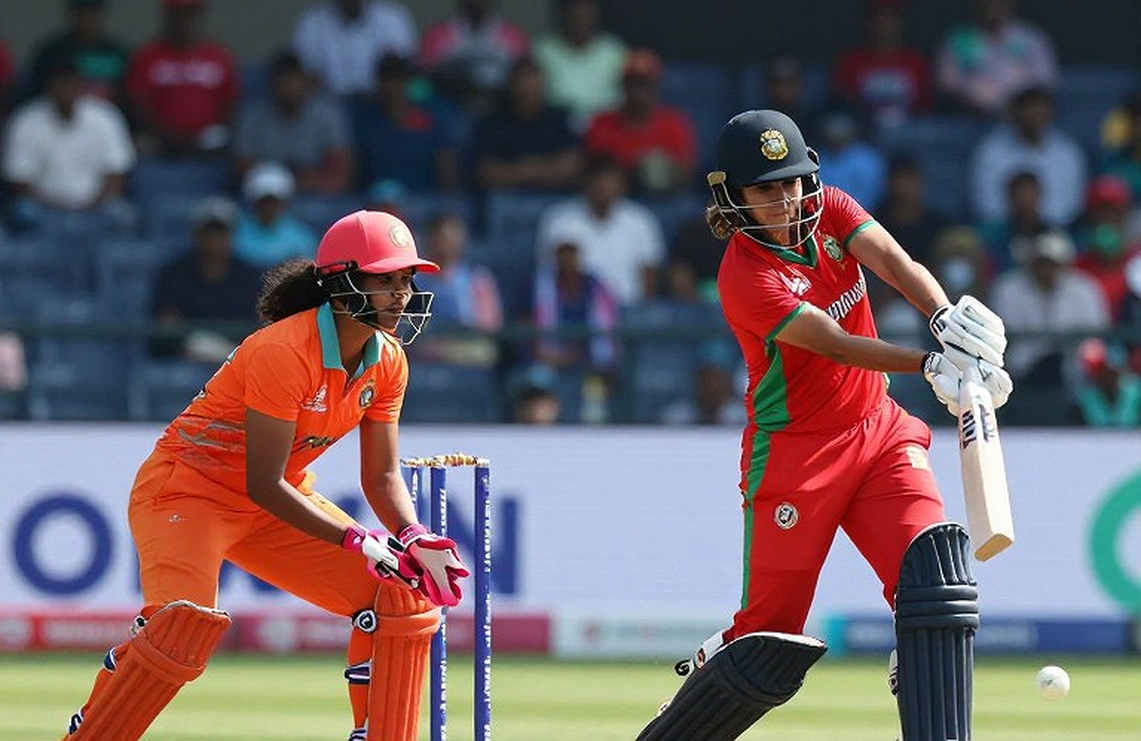
In strong wind the flight of a high catch changes — the ball drifts and the fielder's estimate can fail. In cold conditions grip and reaction slow slightly. And most significantly, floodlights: in an evening match a high catch can disappear into the lights for a split second. High catches at Eden Park are already considered difficult; an evening start raises the risk.
The Geography of the Series
The series runs from Auckland to Wellington, Hamilton and Mount Maunganui. That geography is itself a fielding challenge. Auckland changes dimensions and angles. Wellington makes wind the dominant factor — the flight of a catch must be calculated against it. Hamilton and Bay Oval are relatively more standard, so the challenge is lower — but lower, not absent.
Sridhar's view is that experience is the best tool for handling this venue-to-venue variation. The argument is reasonable, but it has a limitation: experience supplies information, not reaction speed. An experienced fielder can still spill a catch.
Squad Structure Through a Fielding Lens
From this report only fielding can be assessed. Close catching looks good — Rohit's record is the basis. Deep and outfield fielding is below par, with the Kuldeep-Rahul drops as evidence. Batting depth, bowling combination, bench strength and age structure cannot be judged from this source.
Against New Zealand, one thing is clear: the Black Caps are traditionally a strong fielding side, and that advantage grows at home. India is the touring side, so the adaptation test is theirs.
Risk Assessment: What One Catch Can Do in a Tight Series
The overall risk level is Medium. This is not a crisis, but it should not be dismissed either. The reason is simple: in a five-match series, two or three dropped catches can swing results.
Risk one — fielding execution. The 77.5% figure could be exposed further under Eden Park's floodlights and dimensions.
Risk two — preparation compression. One session means limited adaptation time. The report's optimism rests on squad experience, not fresh preparation.
Risk three — personnel. Kuldeep's 5 drops in 11 and Rahul's 4 in 16 are both concrete signals. Since Kuldeep will likely play most matches, his lapses compound across the series.
Risk four — environment. Wind, cold and floodlight variation across four venues. Level: low to medium, given the squad's experience of these conditions.
Risk five — public opinion. Early dropped catches will amplify the "no longer watertight" narrative. Impact low, but the mood can shift.
Risk six — weather disruption. Rain in Auckland and Wellington can affect both training and matches.
An Understated Angle: Field Placement Adjustment
This is not stated directly in the report but follows logically. If catches go down early, the management may adjust field placements to protect weaker catchers — stationing someone like Kuldeep at fine leg or third man, lower-risk positions. That would not stay confined to fielding; the whole fielding structure would shift and bowling strategy could be affected. It is a hidden tactical risk.
The emphasis on "calling loudly" hints that communication lapses or collisions between fielders may have occurred. The drill targets coordination as well as individual skill. That is a low-confidence inference — the report does not say it outright — but it is worth noting.
Industry Context: What This Story Actually Matters For
The industry-level impact of this report is negligible. It is a routine pre-series training report, not a commercial or structural story. No auction, broadcast rights or franchise valuation content appears. An India overseas tour is commercially significant for the host board, but that is not in the article and should be logged only as inference.
One thing does matter: the use of the term "catching efficiency" in the media demonstrates growing analytics-led storytelling in Indian cricket coverage. It is a slow, long-term shift, but the direction is clear.
The Numbers at a Glance
- Team catching efficiency across the last 18 ODIs: 77.5%
- Total catches dropped: 27
- Rohit Sharma: 18 matches, 15 catches, 2 drops
- Kuldeep Yadav: 11 matches, 5 drops (about 0.45 per match)
- KL Rahul: 16 matches, 4 drops (about 0.25 per match)
- Practice session: about 30 minutes, in small groups
- First ODI: Eden Park, Auckland
- Series venues: Auckland, Wellington, Hamilton, Mount Maunganui
What to Watch
First, India's caught-to-opportunity ratio in the first two ODIs. Two or more drops in the opening match would validate the 77.5% concern.
Second, Kuldeep Yadav's fielding position. Deep placement raises drop exposure; close placement lowers it.
Third, high catches under Eden Park's floodlights. Every attempt in an evening session will be a test.
Fourth, the narrative shift. A clean fielding display in the first ODI would cool the "no longer watertight" story quickly.
Conclusion
The essence of this report is one sentence: India's ODI fielding is below average and the data proves it, but the preparation window is so narrow that a major improvement is unlikely. The "cutting the angles" drill and Sridhar's advice provide context, not transformation.
That does not mean India will lose on fielding. It means the series carries one genuine, measured risk — and it is tied to catching, not to bat or ball. Over five ODIs, that is the risk most capable of swinging a result quickly.
(This report is based on public information and a Times of India training-session report. The catching figures are not attributed to a named data vendor and should be treated as directional. This content is for sports-information purposes only.)