
Cricket's Shifting Strategy: Data, Specialists and the New All-Rounder Balance
आधुनिक क्रिकेट में रणनीति का केंद्र अनुभव से डेटा की ओर खिसक गया है। टीमें अब शॉट-सिलेक्शन मैप, लाइन-लेंथ हीटमैप और वर्कलोड डेटा के आधार पर चयन करती हैं। सीमित ओवरों में ऑलराउंडर की अहमियत बढ़ी है क्योंकि वे बल्लेबाज़ी की गहराई और गेंदबाज़ी का बीमा, दोनों देते हैं। इम्पैक्ट प्लेयर जैसे नियमों ने विशेषज्ञता को बढ़ावा दिया, पर इससे खिलाड़ियों का समग्र विकास प्रभावित हुआ है। गेंदबाज़ी में यॉर्कर, स्लोअर बॉल और कटर का इस्तेमाल अब पावरप्ले में भी आम है, और स्पिनर को नियंत्रण के औज़ार के रूप में देखा जाता है। बल्लेबाज़ी में स्ट्राइक रेट का दबाव शॉट-सिलेक्शन को कमज़ोर करता है। कप्तान की भूमिका कमांडर से मैनेजर में बदल गई है, और फिटनेस प्रबंधन के कारण रोटेशन अनिवार्य हो गया है। मुख्य आलोचना यह है कि डेटा ने खेल की स्वतःस्फूर्तता घटाई है; संतुलन तकनीक और अंतर्ज्ञान दोनों को जगह देने में है।
Over the past decade, cricket strategy has changed as rapidly as its technology. The game itself remains the same — a ball, a bat and a twenty-two-yard pitch. But the way teams are built off the field, the way players are selected, and the way decisions are made during a match have been transformed almost completely. Where the captain's experience and the coach's judgement once were decisive, data analytics, workload management and condition-specific planning now carry equal weight. This shift is not confined to one format — from field placements in Test cricket to death-over strategy in T20, its imprint is visible everywhere. The question is whether this change has improved the game or stripped away something natural.
Data Analytics: From Guesswork to Calculation
Not long ago, having an analyst travelling with the team was considered a luxury. Today nearly every major side has data analysts working alongside physios and skill coaches as equals. Shot-selection maps for batters, line-and-length heatmaps for bowlers and sprint-speed data in fielding are all routine parts of selection meetings. The most direct consequence is that the gap between a player who 'looks good' and one who is actually effective has become visible. It often happens that a batter with a fine average turns out to be the least useful option in a particular situation — and the data says so in advance.
But data has limits. Numbers describe the past, while a match is played out in future uncertainty. Teams that lean on statistics alone tend to get stuck in the moments where data has no answer — a pitch altered by rain, or an unexpected spell from a newcomer. The most successful sides treat data not as the final truth but as one input among many.
The Return of the All-Rounder
The clearest change in team composition is the growing importance of all-rounders. In limited-overs cricket, the structure of six specialist batters and four specialist bowlers is now considered risky. The reason is simple: if a bowler breaks down, the team may not even have enough overs to cover. Players like Hardik Pandya, Ravindra Jadeja, Ben Stokes and Shakib Al Hasan become the team's insurance — they contribute with both bat and ball and add depth and flexibility.
There is a flip side. In the rush to become an all-rounder, several young players never fully master any single skill. The result is a squad of players who do both jobs 'adequately' but excel at neither. Selectors face a recurring dilemma: pick balance or pick quality.
Specialists versus a Balanced XI
Another layer of this debate is the arrival of rules like the Impact Player. When a team has an extra player available, strategy tilts further towards specialisation. Batters are now sent in with a single job — score quickly. On the bowling side, specialists have emerged who are prepared only for the death overs or only for the powerplay.
This is the age of specialisation, but it has a cost. When every role is broken into fragments, a player's overall development suffers. A young fast bowler who works only on the yorker may never learn to swing the ball in a long spell or to wear a batter down with patience. That gap becomes hard to fill in Test cricket, where holding to a plan over long periods is essential.
The New Grammar of Bowling
The biggest change in fast-bowling strategy is that the line between the 'wicket-taking ball' and the 'run-saving ball' is blurring. New-ball swing and seam movement once dominated; now slower balls, cutters and wide yorkers are common even in the powerplay. Bowlers like Jasprit Bumrah have shown that pace combined with extraordinary accuracy and subtle changes of speed can leave a batter completely helpless.
Spin bowling has also been divided into roles. One bowler exists to choke runs through the middle overs; another is there to tempt a batter into a mistake. Players like Rashid Khan embody this shift — their value is measured not only in wickets but in the hesitation they create in a batter's mind. The modern captain sees a spinner as a tool of control rather than of attack.
Intent and Risk in Batting
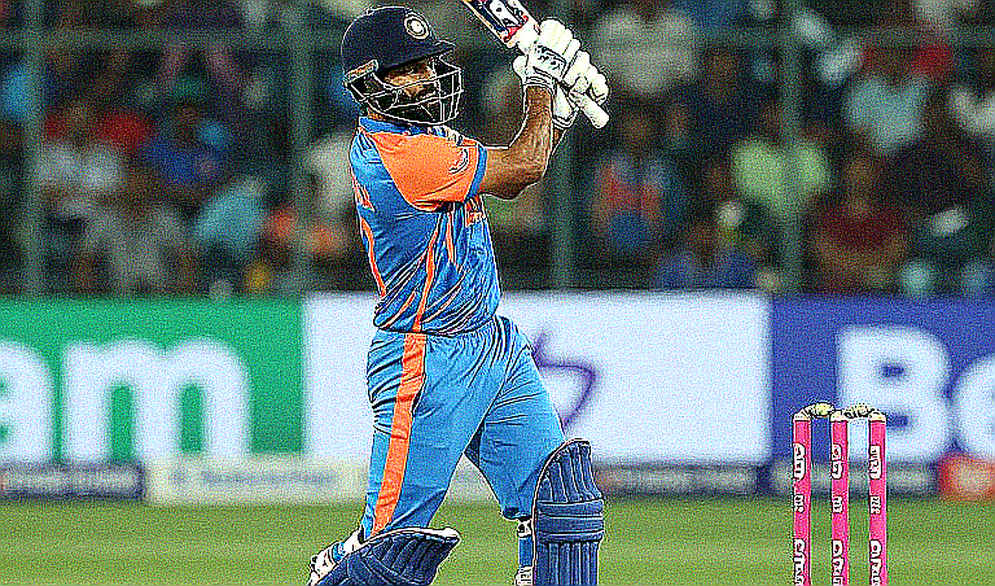
The psychology of batting has changed too. Even in Test cricket, the old idea of 'the longer you bat, the better' is fading. The way Virat Kohli, Joe Root, Kane Williamson and Steve Smith have kept scoring at a healthy rate in the longest format shows that defence and aggression are not opposite poles but two tools of the same strategy.
Yet the greatest challenge is the blind race for strike rate. When every batter is under pressure to score quickly, shot selection weakens. Many young batters are dismissed trying to hit a boundary off their very first ball. The real task for a coaching staff is to develop a player's understanding of risk, not merely a habit of taking it.
Captaincy: From Commander to Manager
A captain's job was once seen as making decisions on the field. Now a captain works as a manager — a bridge between selectors, the coach, the analysts and the players. Captains like Pat Cummins show how a balance is struck between clear communication and long-term planning. The continuity in Australia's strategy under him was the product of organisational thinking more than individual charisma.
An unwritten part of captaincy is absorbing pressure from media and fans. In the age of social media, every decision is evaluated instantly. In that environment a captain must shield his players from outside noise — a skill no less important than technical ability.
Fitness, Workload and Rotation
The calendar is a reality every team is grappling with. Continuous series, leagues and international tours test the physical limits of players. Rotation has therefore become a necessity rather than a luxury. Resting fast bowlers for selected matches, giving batters mental breaks, and placing the physio's advice above selection instincts are now hallmarks of modern team management.
But there is a downside. When players change constantly, understanding and coordination within the team never develop. Small fielding errors and a lack of chemistry between bowler and keeper are often the result.
The Domestic Structure and the Talent Pipeline
A national team's strength lies in its domestic structure. Countries that invested in domestic cricket were rewarded over the long run. In India, domestic tournaments and franchise leagues have given a platform to players who might otherwise never have been seen. In Pakistan, players like Babar Azam illustrate how domestic performance gradually translates to the international stage.
But the quality of a pipeline is not decided by the number of matches alone. The variety of pitches, the quality of coaching and the standard of injury management together determine whether a player will survive at international level.
Criticism and Limits
The sharpest criticism of modern strategy is that it has taken spontaneity out of the game. When every decision is pre-determined and every opposition batter is 'decoded' in data, the unpredictable moments that made cricket thrilling become rarer. A second criticism is that the growing weight of data puts a mental burden on players — granular analysis of every innings can undermine confidence.
There is substance in these criticisms, but one thing is overlooked: data is part of preparation, not of the match. The player who bowls the ball is a human being, and his mind is not controlled by a spreadsheet. On the biggest stages it is often the player willing to depart from the plan who rises to the occasion.
Conclusion
The future of cricket is a continuous conversation between technology and human intuition. Data, specialisation and physical management have made the game professional; its soul still lives in the moment when a player makes a decision no model contains. Teams that understand this balance win trophies. Those that lean on only one side look good in the numbers, not in the table.
संबंधित खिलाड़ी
लोकप्रिय/पसंदीदा पुस्तकें
The Empty Column: Indian Cricket Does Not Lack Talent, It Lacks Records2026-11-01
Two Minutes, 214 Decisions, and the Residue No Clause Can Hold2026-11-01
Empty Data, Full Commentary Box: Cricket Analytics' Most Expensive Silence2026-11-01
After Eden Park drubbing, Iyer defends: 'It's a learning curve, we are new to grounds like these'2026-10-31
ICC's criiio Day: The One-Million-Player Claim, and the Methodology Question That Won't Go Away2026-10-31
अनुशंसित
Wisden quiz: 24 six-wicket hauls for under 20 runs in Tests since 2026, but 21 of the bowlers remain unnamed2026-11-02
The First Question in Cricket Analysis: Which Format Was It?2026-11-01
From 5-182 to 5-335: Tasmania's 'Control' Is a Loan From Two Batters, and Maddinson's Catch Is Four Seconds of Accounting2026-10-30
The Lesson of an Empty Table: The Cricket Data Report That Had Nothing In It2026-10-31
Two Minutes, 214 Decisions, and the Residue No Clause Can Hold2026-11-01
अनुशंसित
Input Missing: Cricket Analysis Report Blocked on Null Data2026-11-01
West Indies A vs England Lions: The Real Story in Three Unofficial T20s Is the Selection Pipeline, Not the Scoreline2026-10-31
Fakhar's Century, Baig's 74 and Shaheen's All-Round Show: Pakistan's Thrilling Three-Wicket Win2026-11-02
Behrendorff's Shoulder: The Angle Melbourne Renegades Built Their MCG Move Around Is Out of BBL|162026-10-23
Eight Columns, Zero Facts: Cricket Media's New Assembly Line and the Silence of an Empty Payload2026-10-30
अनुशंसित
Two Minutes, 214 Decisions, and the Residue No Clause Can Hold2026-11-01
Babar Azam's Form Ledger: Four Innings, 118 Runs, Zero Fifties — And the Four Data Points Missing From the Story2026-10-29
The Prawn Is a Witness, the Selection Sheet Is the Accused: Auditing Australia's Bowling Ledger at Gqeberha2026-10-23
The Neck Cushion and the 28: Australia's Real Problem Isn't Smith's Injury, It's the Batting Order Around Him2026-10-24
Fakhar's Century, Baig's 74 and Shaheen's All-Round Show: Pakistan's Thrilling Three-Wicket Win2026-11-02
अनुशंसित
Third Flag, Same Action: Aliss Al Islam and the Half-Stamped Clearance2026-10-30
Fakhar Zaman's 127 and Three Dropped Catches: How a Century Gets Priced2026-11-01
The Expansion of Professional Cricket and the Limits of Its Players2026-11-02
Rashid Khan Extends ODI Ranking Lead: Four Wickets, an Incomplete Scorecard and a Bigger Question2026-10-29
An Empty Opening Chair Before the Final: Saim Ayub's Domestic Return and Sahibzada Farhan's Examination2026-10-28