
KabaddiPakistan Withdraws from Commonwealth Kabaddi Championship 2026: Field Shrinks from 14 to 13, India’s Favourite Tag and Bigger Questions for Kabaddi
Pakistan Withdraws from Commonwealth Kabaddi Championship 2026: Field Shrinks from 14 to 13, India’s Favourite Tag and Bigger Questions for Kabaddi
मुख्य उत्तर: पाकिस्तान ने कॉमनवेल्थ कबड्डी चैंपियनशिप 2026 से नाम वापस लिया, जिससे पुरुष फील्ड 14 से 13 देशों का रह गया। आयोजन 23 से 31 अक्टूबर 2026 तक अहमदाबाद के वीर सावरकर स्पोर्ट्स कॉम्प्लेक्स में बताया गया है। पाकिस्तान के वापसी का आधिकारिक कारण सार्वजनिक नहीं है; संभावित कारणों में प्रशासनिक देरी, वीजा/मंजूरी, फंडिंग, खेल फॉर्म या स्टैंडर्ड स्टाइल के अनुकूलन की समस्या शामिल हो सकती है, लेकिन इनकी पुष्टि नहीं हुई है। ईरान और चीनी ताइपे भी इस आयोजन में नहीं हैं, जिससे प्रतिस्पर्धा कमजोर पड़ी है। भारत एशियाई खेल 2026 में पुरुष और महिला दोनों वर्गों में स्वर्ण जीतकर स्पष्ट पसंदीदा है। व्यावसायिक रूप से पाकिस्तान की गैरमौजूदगी सबसे बड़ा नुकसान है क्योंकि भारत-पाकिस्तान मुकाबला सबसे बड़ा आकर्षण होता है। कॉमनवेल्थ ढांचे में ईरान शामिल नहीं हो सकता, इसलिए यह टूर्नामेंट संरचनात्मक रूप से उस टीम को बाहर रखता है जो भारत को चुनौती दे सकती है।
Pakistan’s withdrawal from the inaugural Commonwealth Kabaddi Championship 2026 has turned the Ahmedabad event into a major talking point before it has even begun. Reports say the men’s field has dropped from 14 nations to 13 after Pakistan pulled out late. Iran and Chinese Taipei are also not participating, while India is reported to have won both men’s and women’s gold at the Asian Games 2026. The central question, however, remains unanswered: why did Pakistan withdraw? No official reason has been made public, so any explanation must be treated as inference rather than confirmed fact.
The first takeaway is that the event’s prestige is uncertain. It is an inaugural championship, its sanctioning structure is not clearly established, and the field is already depleted. Iran’s absence lowers the sporting standard because Iran is the only team widely seen as capable of challenging India. Pakistan’s absence removes the most emotionally charged fixture—India vs Pakistan—and weakens the broadcast appeal. Chinese Taipei’s absence, especially in the women’s draw, further reduces depth. A 13-nation field may sound large, but competitively it can be very thin.
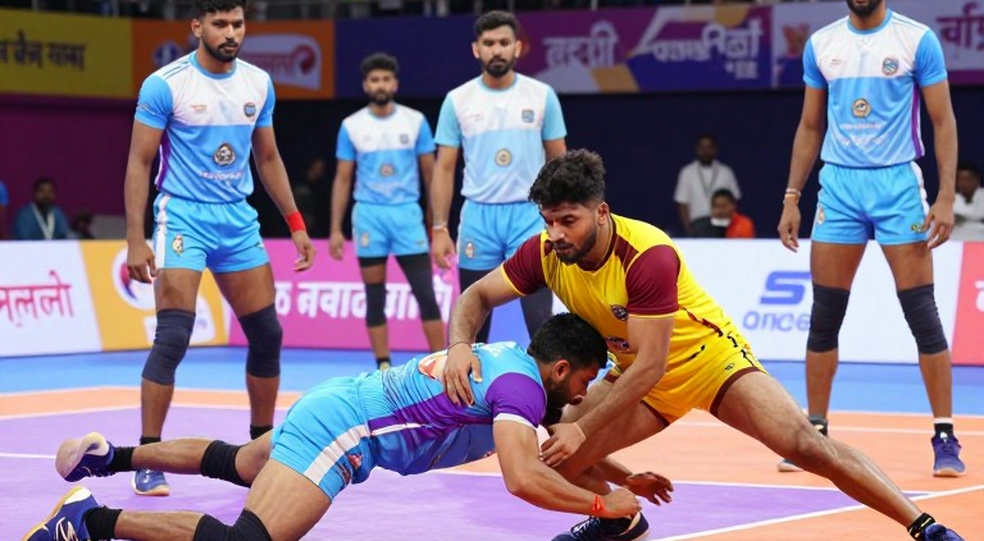
Kabaddi context matters. In Standard Style, a raider must cross into the opponent’s half, touch a defender and return within 30 seconds while continuously chanting "kabaddi." A tackle earns a point; a Super Tackle with three or fewer defenders earns two; an All Out earns two and revives the entire team. The Do-or-Die raid after two empty raids forces teams to attack. The key structural issue is the difference between Standard Style and Circle Style. Standard Style is the rectangular, seven-a-side international format used in the Asian Games and Pro Kabaddi League. Circle Style is played on a circular field, often with eight players, and dominates rural Punjab on both sides of the border. Players raised in Circle Style may be excellent one-on-one evaders but need different preparation for Standard Style’s structured defence, corner cover and multi-defender raids.
This is why Pakistan’s withdrawal should not be read only as a political or emotional decision. Reports claim Pakistan failed to win a medal at the Asian Games 2026 and that this was the first time it failed to secure at least bronze. That claim needs independent verification, but if true, it points to a systemic format-conversion problem rather than a one-off bad tournament. A team with a Circle Style inheritance and limited exposure to the Standard Style international calendar struggles to produce specialists at corner and cover—the two positions that decide modern matches.
A second problem is the absence of data. The report provides no raid points, successful raid percentage, tackle percentage, Super Tackle count, bonus-line points or player-level statistics. The squad is not disclosed. Without such data, no tactical diagnosis is possible. Saying Pakistan failed to reach the semi-finals describes an outcome; it does not explain whether raiding or defence collapsed. It is more reasonable to model Pakistan’s decline as a portfolio failure rather than a star failure.
India’s advantage is the opposite: a deep Pro Kabaddi League pipeline, data-informed coaching and replacements at every position. Pakistan lacks that ecosystem, and its domestic circuit is dominated by Circle Style. A late national-team withdrawal is often administrative—clearance, visas, funding or travel—but that cannot be confirmed here.
Commercially, Pakistan’s absence is the most damaging of the three. Iran’s absence weakens quality; Pakistan’s absence removes the one fixture with genuine emotional and broadcast pull. The Commonwealth framing also has a structural ceiling: Iran is not a Commonwealth nation, so the tournament cannot include the only team capable of beating India. That is a design flaw, not an accident. The real question is not 14 versus 13, but how many of those 13 can genuinely challenge India.
International kabaddi already suffers from event scarcity. Every forfeited appearance costs a national programme development value. For India, the danger is not losing but being under-tested before facing Iran in future. Pakistan’s withdrawal may have administrative, competitive or strategic causes, but without official confirmation, no single explanation should be treated as final. What is clear is that the withdrawal has exposed the event’s prestige problem, its competitive thinness and the structural weaknesses of international kabaddi.
संबंधित खिलाड़ी
लोकप्रिय/पसंदीदा पुस्तकें
Iran's Wrestling Defence and India's Raid-First System: The Real Examination of This Tournament Cycle2026-10-27
The Real Paper Trail of the Release List: Wage Arithmetic, Iranian Defence and the Review Clock in a Kabaddi Transfer Window2026-10-27
Iran Is No Longer the Upset, It Is the Co-Favourite — and Kabaddi Coverage Is Still Counting Volume2026-10-24
Surjeet Singh Captain, Naveen Kumar Deputy: What the Commonwealth Championship Announcement Never Said2026-10-23
The Super 10 Trap: When Kabaddi's Numbers Lie2026-10-23
अनुशंसित
The Super 10 Trap: When Kabaddi's Numbers Lie2026-10-23
Pakistan Withdraws from Commonwealth Kabaddi Championship 2026: Field Shrinks from 14 to 13, India’s Favourite Tag and Bigger Questions for Kabaddi2026-10-28
Commonwealth Kabaddi Championship: 62 Matches, a 39-23 Split, and the Price Sheet Being Set for 20302026-10-24
One Point in Hangzhou, and the Women's Kabaddi Ledger That Never Reached Prime Time2026-10-23
Commonwealth Kabaddi Championship Match 4: England Stands Across the Mat, But India's Real Question Is Its Own Scoreboard2026-10-23
अनुशंसित
Jakarta's 18-27, Hangzhou's 33-29, and the Raid Tracker Nobody Asked For2026-10-27
Commonwealth Kabaddi Championship: 62 Matches, a 39-23 Split, and the Price Sheet Being Set for 20302026-10-24
One Point in Hangzhou, and the Women's Kabaddi Ledger That Never Reached Prime Time2026-10-23
The Super 10 Trap: When Kabaddi's Numbers Lie2026-10-23
Kabaddi's New Arena: From Mud to Mat, From Brute Force to Strategy2026-10-28
अनुशंसित
The Third Raid and the Third Page: How a PKL Regular Season Is Actually Read2026-10-24
Surjeet Singh Captain, Naveen Kumar Deputy: What the Commonwealth Championship Announcement Never Said2026-10-23
Iran's Wrestling Defence and India's Raid-First System: The Real Examination of This Tournament Cycle2026-10-27
Jakarta's 18-27, Hangzhou's 33-29, and the Raid Tracker Nobody Asked For2026-10-27
Kabaddi's New Arena: From Mud to Mat, From Brute Force to Strategy2026-10-28
अनुशंसित
Kabaddi's New Arena: From Mud to Mat, From Brute Force to Strategy2026-10-28
Jakarta's 18-27, Hangzhou's 33-29, and the Raid Tracker Nobody Asked For2026-10-27
Pakistan Withdraws from Commonwealth Kabaddi Championship 2026: Field Shrinks from 14 to 13, India’s Favourite Tag and Bigger Questions for Kabaddi2026-10-28
Ahmedabad's First Commonwealth Kabaddi Championship: 62 Matches, 13 Nations and the Question of 232026-10-23
Commonwealth Kabaddi Championship: 62 matches and 13 nations in Ahmedabad — but this draw does not measure kabaddi's true strength2026-10-24